The planned split of Yum! Brands into two companies should help it increase the number of restaurants it operates, possibly even tripling its current restaurant count, Yum! Brands CEO Greg Creed says.
The parent company of KFC, Pizza Hut and Taco Bell announced in October its plans to separate into two independent, publicly traded companies: Yum Brands! and Yum! China. Under the plans, each company will have distinct strategies and investment characteristics.
“I feel like we had two powerful companies locked up in one, and now there’s unlimited potential,” Creed told USA Today. "I think we can triple the number of restaurants outside of China just like (Yum! China CEO Micky Pant) can triple the number inside China.”
“The emerging markets opportunity is huge,” Creed added. “Take Nigeria. In 10 years’ time it will have more people than Brazil, but we only have 27 restaurants there. We think we could have 900 percent growth just in Nigeria. Brazil, Turkey, Russia, India, all are seeing big growth. In two or three years, we think our unit count will surpass McDonald’s in Russia and India.”
Yum! Brands’ split into two companies, which is subject to various regulatory approvals, is expected to be completed by the end of 2016.
Showing posts with label animal agriculture. Show all posts
Showing posts with label animal agriculture. Show all posts
Friday, December 18, 2015


Tuesday, October 13, 2015
Most popular WATTAgNet stories for week ending October 9
Here are the Top 5 most popular articles and blogs at www.WATTAgNet.com for the week ending October 9.


US Labor Department accuses Pilgrim's of discrimination
Department of Labor's Office of Federal Contract Compliance Programs (OFCCP) has filed a lawsuit against Pilgrim's, alleging the poultry company systematically discriminated against qualified African-American applicants seeking entry-level jobs as laborers and operatives at its plant in Marshville, North Carolina.
Aviagen completes expansion at Oklahoma hatchery
A $9.5 million expansion project at Aviagen's hatchery in Sallisaw, Oklahoma, has been completed.
Mycotoxins confirmed across US during harvest
The Monday Mycotoxin Report from Neogen on October 5 highlighted new confirmed reports of mycotoxins in corn across the country.
5 organic acids in piglet and broiler feeds -- too much?
BLOG: I just reviewed another feed formula, and it contained at least five different acids. I say at least because one product was a blend of acids, whereas three others were straight organic acids. Basically, the whole range of available organic acids!
8 key findings about Vietnam animal feed market
Vietnam's animal feed market size is expected to reach US$10.55 billion by 2022, according to a new report by Grand View Research Inc.
Friday, October 9, 2015
Aguilera is global spokeperson for World Hunger Relief effort
Yum! Brands has announced the launch of its annual World Hunger Relief effort featuring multi-Grammy Award winner and international superstar Christina Aguilera in a new public service announcement (PSA).
According to the United Nations World Food Programme (WFP), there are 795 million people around the world who suffer from chronic hunger. Yum! Brands’ World Hunger Relief effort is the world’s largest private sector hunger relief initiative spanning more than 125 countries, over 41,000 KFC, Pizza Hut and Taco Bell restaurants and 1.5 million associates. The initiative began in 2007 in an effort to raise awareness, volunteerism and funds for the WFP and other hunger relief agencies.
The new PSA includes footage from Aguilera’s recent WFP humanitarian trip to Ecuador where she witnessed the effects of hunger first hand and helped beneficiaries of WFP’s nutrition programs. Aguilera met with local refugee families and served food to hungry children who often times receive just one meal a day through WFP’s school feeding program. The PSA will air online later this fall.
In addition to the new PSA, Aguilera raises awareness for the global hunger issue through World Hunger Relief posters at KFC, Pizza Hut and Taco Bell restaurants, plus online efforts including the campaign’s website, HungertoHope.com. She has served as a volunteer spokesperson for World Hunger Relief since 2009 where her participation has helped raise millions for WFP and other hunger relief agencies. She also serves as an “Ambassador Against Hunger” for WFP where she has traveled on several relief trips with them.
“I’ve visited WFP relief sites in Ecuador, Rwanda, Haiti, and Guatemala and they are life changing experiences,” said Aguilera. “While I’ve witnessed tremendous need, I’ve also seen the joy from mothers and their children as they’re served a meal through WFP. My goal with Yum! Brands World Hunger Relief is to inspire as many people as possible to donate to the cause and become part of the solution. Just $1 will provide a school meal for four children in developing countries.”
“We’re on a mission to Feed the World by making a difference in global hunger,” said Greg Creed, Chief Executive Officer, Yum! Brands. “We’re thankful to WFP for their life-saving efforts in developing countries and to Christina Aguilera for using her voice to raise awareness about this critical issue. I’m also proud of the hard work and passion of our associates and franchisees around the globe who raise funds, food donations and volunteer in their local communities for hunger relief.”
“We are grateful for Yum! Brands’ partnership and the enthusiasm they share with millions of their customers who join our movement every year to end global hunger,” said Ertharin Cousin, Executive Director of WFP. “With their support, WFP is able to continue providing life-changing food assistance to those in need and make progress toward the global goal of zero hunger by 2030.”
Since 2007, Yum! Brands’ World Hunger Relief effort has raised more than $600 million for WFP and other hunger relief organizations and provided 2.4 billion nutritious meals for those in need. Every U.S. dollar raised goes directly toward WFP’s operations to fight hunger worldwide, mostly to disaster relief and school meals programs. Just one U.S. dollar provides meals to four hungry children at school. Consumers can visit HungertoHope.com, to donate in KFC, Pizza Hut and Taco Bell restaurants worldwide or text “WHR” to 90999 in the U.S. to make a donation.
Yum! also addresses hunger in the U.S. through its Harvest program. Since 1992, the company’s brands have contributed more than 176 million pounds of food to over 3,000 nonprofit organizations for those at risk of hunger in the U.S. Since its launch over two decades ago, Yum! Harvest has become the largest prepared-food donation program in the world.
Join the movement at #FeedtheWorld @yumbrands.
According to the United Nations World Food Programme (WFP), there are 795 million people around the world who suffer from chronic hunger. Yum! Brands’ World Hunger Relief effort is the world’s largest private sector hunger relief initiative spanning more than 125 countries, over 41,000 KFC, Pizza Hut and Taco Bell restaurants and 1.5 million associates. The initiative began in 2007 in an effort to raise awareness, volunteerism and funds for the WFP and other hunger relief agencies.
The new PSA includes footage from Aguilera’s recent WFP humanitarian trip to Ecuador where she witnessed the effects of hunger first hand and helped beneficiaries of WFP’s nutrition programs. Aguilera met with local refugee families and served food to hungry children who often times receive just one meal a day through WFP’s school feeding program. The PSA will air online later this fall.
In addition to the new PSA, Aguilera raises awareness for the global hunger issue through World Hunger Relief posters at KFC, Pizza Hut and Taco Bell restaurants, plus online efforts including the campaign’s website, HungertoHope.com. She has served as a volunteer spokesperson for World Hunger Relief since 2009 where her participation has helped raise millions for WFP and other hunger relief agencies. She also serves as an “Ambassador Against Hunger” for WFP where she has traveled on several relief trips with them.
“I’ve visited WFP relief sites in Ecuador, Rwanda, Haiti, and Guatemala and they are life changing experiences,” said Aguilera. “While I’ve witnessed tremendous need, I’ve also seen the joy from mothers and their children as they’re served a meal through WFP. My goal with Yum! Brands World Hunger Relief is to inspire as many people as possible to donate to the cause and become part of the solution. Just $1 will provide a school meal for four children in developing countries.”
“We’re on a mission to Feed the World by making a difference in global hunger,” said Greg Creed, Chief Executive Officer, Yum! Brands. “We’re thankful to WFP for their life-saving efforts in developing countries and to Christina Aguilera for using her voice to raise awareness about this critical issue. I’m also proud of the hard work and passion of our associates and franchisees around the globe who raise funds, food donations and volunteer in their local communities for hunger relief.”
“We are grateful for Yum! Brands’ partnership and the enthusiasm they share with millions of their customers who join our movement every year to end global hunger,” said Ertharin Cousin, Executive Director of WFP. “With their support, WFP is able to continue providing life-changing food assistance to those in need and make progress toward the global goal of zero hunger by 2030.”
Since 2007, Yum! Brands’ World Hunger Relief effort has raised more than $600 million for WFP and other hunger relief organizations and provided 2.4 billion nutritious meals for those in need. Every U.S. dollar raised goes directly toward WFP’s operations to fight hunger worldwide, mostly to disaster relief and school meals programs. Just one U.S. dollar provides meals to four hungry children at school. Consumers can visit HungertoHope.com, to donate in KFC, Pizza Hut and Taco Bell restaurants worldwide or text “WHR” to 90999 in the U.S. to make a donation.
Yum! also addresses hunger in the U.S. through its Harvest program. Since 1992, the company’s brands have contributed more than 176 million pounds of food to over 3,000 nonprofit organizations for those at risk of hunger in the U.S. Since its launch over two decades ago, Yum! Harvest has become the largest prepared-food donation program in the world.
Join the movement at #FeedtheWorld @yumbrands.
Monday, October 5, 2015
7 facts about global agriculture markets
Deborah Perkins, managing director at Dutch cooperative bank Rabobank, presented an overview of the opportunities and challenges facing the global food and agribusiness sector at the Women in Agribusiness Summit on September 28. Perkins discussed recent macroeconomic developments, commodity prices, and the importance of trade and its risks and rewards. Key takeaways from her presentation include:
- Economic growth in China is slowing and debt has skyrocketed. However, Perkins said China’s economy is not collapsing.
- Disruptions in Greece, Russia and the Middle East have an impact on world markets and oil prices.
- Incomes are rising in highly populated countries at an unprecedented speed, which leads to increased consumption of meat and milk.
- Increased urbanization means that, rather than growing their own food, people are getting more of their food at supermarkets and restaurants.
- Weather disruptions have a big effect on world prices and affect grains and proteins sectors.
- Extreme weather events are a factor in volatility.
- In 2015, almost all commodity prices declined.
Monday, August 24, 2015
WATTAgNet relaunches in mobile-friendly format
WATTAgNet.com, WATT Global Media’s website covering the world poultry, animal feed and pig industries, has been relaunched in a new, mobile-friendly format. The entire site is now optimized for easy viewing on computer, tablets or smartphones.
WATTAgNet.com still contains in-depth stories from the WATT animal agribusiness magazines, daily news updates gathered by our international staff, commentary from our seasoned team of journalists and industry observers and exclusive features such as Market Data and Top Companies listings.
In addition to being mobile-friendly, there are numerous upgrades and new features.
The revamped Market Data section allows users to view interactive charts covering global poultry, feed and pig markets. Registration is required to view this data, and it is free and simple.
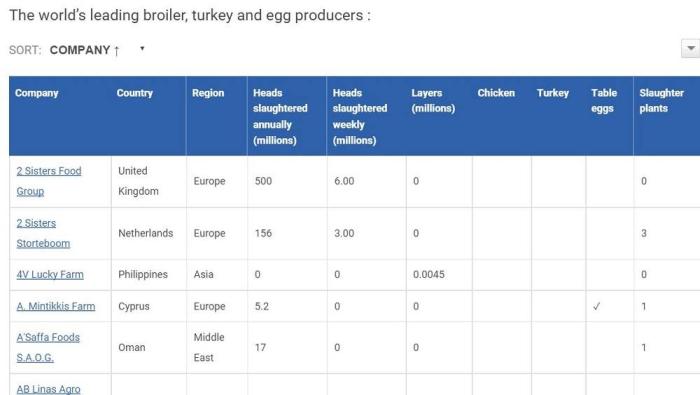
The exclusive online Top Poultry Companies database has been expanded and improved. The new database allows users to search for poultry companies worldwide by name, region or product. Poultry industry professionals can login to view these listings, which include historical data such as annual revenue, products manufactured, geographic markets served and headquarters’ location. The new site also includes a table where users can sort and study the capabilities of the companies in the database.
WATTAgNet.com has a new, easy-to-use commenting engine. To comment or share content, simply log in using Facebook, Twitter, Google+ or Disqus. The first time you do this, the site will ask a few questions and connect with your social media account. After that, sharing and commenting is as simple as the click of a button.

This commenting and sharing feature is optimized for easy use from any device, just like the rest of the site. Please feel free to comment, share and discuss with your fellow animal agribusiness industry professionals.
Registration is required to view parts of the site, such as Market Data and Top Companies, and it is free and simple. If you are a registered user of the former WATTAgNet.com site, you will be asked to reset your password when you first log in.
WATTAgNet.com still contains in-depth stories from the WATT animal agribusiness magazines, daily news updates gathered by our international staff, commentary from our seasoned team of journalists and industry observers and exclusive features such as Market Data and Top Companies listings.
In addition to being mobile-friendly, there are numerous upgrades and new features.
The revamped Market Data section allows users to view interactive charts covering global poultry, feed and pig markets. Registration is required to view this data, and it is free and simple.
The exclusive online Top Poultry Companies database has been expanded and improved. The new database allows users to search for poultry companies worldwide by name, region or product. Poultry industry professionals can login to view these listings, which include historical data such as annual revenue, products manufactured, geographic markets served and headquarters’ location. The new site also includes a table where users can sort and study the capabilities of the companies in the database.
WATTAgNet.com has a new, easy-to-use commenting engine. To comment or share content, simply log in using Facebook, Twitter, Google+ or Disqus. The first time you do this, the site will ask a few questions and connect with your social media account. After that, sharing and commenting is as simple as the click of a button.
This commenting and sharing feature is optimized for easy use from any device, just like the rest of the site. Please feel free to comment, share and discuss with your fellow animal agribusiness industry professionals.
Registration is required to view parts of the site, such as Market Data and Top Companies, and it is free and simple. If you are a registered user of the former WATTAgNet.com site, you will be asked to reset your password when you first log in.
Thursday, August 20, 2015
Darling Ingredients second quarter sales down
Darling Ingredients Inc., a global leader in converting edible and inedible bio-nutrient streams into a wide range of ingredients and specialty products for customers in the pharmaceutical, food, pet food, feed, technical, fuel, bioenergy, and fertilizer industries, has announced financial results for the second quarter ended July 4, 2015, and that its Board of Directors approved the repurchase of up to an aggregate of $100 million of Darling's common stock, depending on market conditions.
"Our earnings improved sequentially with all segments showing EBITDA margin improvements. This is the third quarter in a row that we have been able to improve margins all while working to offset lower and volatile selling prices. Our focus on operational efficiencies and SG&A reductions are also beginning to contribute. Working capital improvements, the $25 million dividend from Diamond Green Diesel (DGD) in April 2015, along with slowing our capital spending outflows allowed us to repay nearly $70 million in debt during the quarter," said Randall Stuewe, Darling Ingredients Inc. chairman and CEO.
"The Feed Ingredients Segment achieved improved margins while facing a continuation of declining fat and protein values. Our European, USA and Canadian rendering operations performed admirably and continue to make the necessary adjustments to regain sustainable margins. Our USA restaurant services and bakery feeds business improved but we still have work to do. Raw material volumes moderated over first quarter typical with seasonality," continued Stuewe.
"Our Fuel Ingredients Segment continues to deliver predictable returns with the exception of our Canadian biodiesel asset. Although the U.S. EPA released in June proposed biomass based diesel volumes within our expectations, the industry and our Canadian plant continue to operate in the red before the tax credit is considered. Rendac, our disposal rendering business, and Ecoson, our biophosphate operation producing green energy, delivered steady performances quarter over quarter."
Stuewe added, "Our Diamond Green Diesel Joint Venture continued its strong operational performance in the second quarter of 2015 shipping over 44 million gallons of renewable diesel. We remain optimistic that the U.S. Biofuels Tax Extenders package will be reinstated and will retroactively add approximately $25 million to income in the second quarter.
"Globally, we remain focused on debt reduction, working capital improvement and cost reductions to improve shareholder value. We very much believe in our strategy and the long term positioning of our global platform of creating sustainable ingredients for a growing population," concluded Stuewe.
Darling’s board has authorized a share repurchase program for up to $100 million depending on market conditions. The repurchases may be made from time to time on the open market at prevailing market prices or in negotiated transactions off the market. Repurchases may occur over the next 24 months, unless extended or shortened by the Board of Directors, Stuewe said.
For the second quarter of 2015, the company reported net sales of $859.3 million, as compared with net sales of $1,031.3 million for the second quarter of 2014. The $172.0 million decrease in net sales is primarily attributable to lower finished product prices, primarily in the global fat markets, and by $113.9 million for the foreign exchange rate impact of a weak euro and Canadian dollar. Overall, global raw material volumes were stronger year over year.
Net income attributable to Darling for the three months ended July 4, 2015, was $3.1 million, or $0.02 per diluted share, compared to a net income of $32.8 million, or $0.20 per diluted share, in the three months ended June 28, 2014.
"Our earnings improved sequentially with all segments showing EBITDA margin improvements. This is the third quarter in a row that we have been able to improve margins all while working to offset lower and volatile selling prices. Our focus on operational efficiencies and SG&A reductions are also beginning to contribute. Working capital improvements, the $25 million dividend from Diamond Green Diesel (DGD) in April 2015, along with slowing our capital spending outflows allowed us to repay nearly $70 million in debt during the quarter," said Randall Stuewe, Darling Ingredients Inc. chairman and CEO.
"The Feed Ingredients Segment achieved improved margins while facing a continuation of declining fat and protein values. Our European, USA and Canadian rendering operations performed admirably and continue to make the necessary adjustments to regain sustainable margins. Our USA restaurant services and bakery feeds business improved but we still have work to do. Raw material volumes moderated over first quarter typical with seasonality," continued Stuewe.
"Our Fuel Ingredients Segment continues to deliver predictable returns with the exception of our Canadian biodiesel asset. Although the U.S. EPA released in June proposed biomass based diesel volumes within our expectations, the industry and our Canadian plant continue to operate in the red before the tax credit is considered. Rendac, our disposal rendering business, and Ecoson, our biophosphate operation producing green energy, delivered steady performances quarter over quarter."
Stuewe added, "Our Diamond Green Diesel Joint Venture continued its strong operational performance in the second quarter of 2015 shipping over 44 million gallons of renewable diesel. We remain optimistic that the U.S. Biofuels Tax Extenders package will be reinstated and will retroactively add approximately $25 million to income in the second quarter.
"Globally, we remain focused on debt reduction, working capital improvement and cost reductions to improve shareholder value. We very much believe in our strategy and the long term positioning of our global platform of creating sustainable ingredients for a growing population," concluded Stuewe.
Darling’s board has authorized a share repurchase program for up to $100 million depending on market conditions. The repurchases may be made from time to time on the open market at prevailing market prices or in negotiated transactions off the market. Repurchases may occur over the next 24 months, unless extended or shortened by the Board of Directors, Stuewe said.
For the second quarter of 2015, the company reported net sales of $859.3 million, as compared with net sales of $1,031.3 million for the second quarter of 2014. The $172.0 million decrease in net sales is primarily attributable to lower finished product prices, primarily in the global fat markets, and by $113.9 million for the foreign exchange rate impact of a weak euro and Canadian dollar. Overall, global raw material volumes were stronger year over year.
Net income attributable to Darling for the three months ended July 4, 2015, was $3.1 million, or $0.02 per diluted share, compared to a net income of $32.8 million, or $0.20 per diluted share, in the three months ended June 28, 2014.
Wednesday, August 5, 2015
FIAAP/VICTAM/GRAPAS organizing new event
- Animal feed ingredients and additives
- Aqua feed ingredients and production
- Biomass pelleting technology
- Pet food ingredients and production
- Flour milling and grain processing
- Feed production technology
General Manager of Victam International BV, Henk van de Bunt has announced that Victam will be launching a new venture. The news was released at a press conference held during the recent FIAAP/VICTAM/GRAPAS International 2015.
In conjunction with some of their meeting organizers, Victam is planning a two-day series of industry conferences to be held near Cologne in the summer of 2017.
The typical delegate will be in the upper management of feed and flour mills, grain processors and biomass pelleting plants. Industry executives will comprise CEOs, mill and plant directors, managers, nutritionists, feed formulators and more.
Acknowledged industry experts will present a program of papers on the following subjects:
There will be an area for companies to have small booths
Monday, August 3, 2015
Neogen reports record revenues and earnings
Neogen Corporation (NASDAQ: NEOG) has announce that net income for the fourth quarter of its 2015 fiscal year, which ended May 31, increased 25% to $9,384,000, or $0.25 per fully diluted share, from $7,537,000, $0.20 per share, in fiscal 2014.
Neogen's fourth quarter revenues were $78,611,000, a 17% increase over revenues from 2014's final quarter. Neogen's revenues for its 2015 fiscal year increased 14% to $283,074,000, up from $247,405,000 in the company's previous fiscal year. On an organic basis, growth for the company was 14% for the quarter, and 8% for the full year. Net income for the 2015 fiscal year increased 19% from the previous year to $33,526,000, or $0.90 per share, compared to the prior year's $0.76 per share. Revenues and net income for the fourth quarter, and the 2015 fiscal year, established new all-time highs for the 33-year-old company.
"We are pleased to report a strong finish to our 2015 fiscal year, and increased momentum as we begin our new fiscal year. In our fourth quarter, we exceeded our goal of producing double-digit organic growth for both our Food and Animal Safety segments," said James Herbert, Neogen's chief executive officer and chairman. "Neogen is uniquely positioned to grow and prosper by helping the world's food producers and processors meet ever-increasing challenges -- whether inside the farm gate, or anywhere along the processing and distribution chain."
The fourth quarter was the 93rd of the past 98 quarters that Neogen reported revenue increases as compared with the previous year -- including all consecutive quarters in the last 10 years.
"Neogen's increasing momentum has been the result of creating and expanding opportunities in our diverse global markets through the introduction of new products and services, and improving our operational capabilities," said Richard Calk, Neogen's president and chief operating officer. "For example, with the recent development of our improved ATP hygiene monitor, AccuPoint® Advanced, we significantly upgraded our manufacturing technology and now also have a better product."
Neogen's gross margin was 49.4% in its 2015 fiscal year, compared to 49.6% for fiscal 2014. Operating expenses grew by 9% in 2015, less than revenue growth of 14%. Operating income as a percentage of revenues was 18.8% in the current year, as compared to 17.5% in the company's 2014 fiscal year.
"We were adversely impacted by currency fluctuations in the fiscal year, particularly the second half of the year, as the strength of the U.S. dollar resulted in comparatively lower values for the euro, the British pound, the Brazilian real, and the Mexican peso," said Steve Quinlan, Neogen's chief financial officer. "These currency fluctuations negatively impacted both our top and bottom lines in the 2015 fiscal year, making our financial results even more impressive. Neogen experienced a strong year of cash generation, and our inventory control efforts showed progress, as we held inventory levels essentially flat for the year as our revenues increased 14%."
Revenues for the company's Food Safety segment increased 13% during the fiscal year compared to the prior year. Sales of Neogen's general microbiology products increased 40% in fiscal 2015 compared to the prior year, aided in large part by the Oct. 1, 2014 acquisition of BioLumix®. The company believes there is a strong synergistic relationship between the BioLumix and Soleris® test systems, as both systems allow for the accurate detection of spoilage organisms in much less time than traditional microbiology methods. Overall organic growth for the Food Safety segment was 10% for the year.
Sales of Neogen's rapid tests for food allergens, such as gluten and peanuts, continued their strong performance in the fiscal year, growing approximately 18% compared to the prior year. The growth was aided by increasing global regulatory efforts and consumer demand to ensure products represented as being free of food allergens are correctly labeled. The increase was also due to Neogen's effective response to the discovery of large-scale contamination of cumin, and other spice blends, with peanut and other known food allergens.
Neogen's Animal Safety segment reported a revenue increase of 16% in its 2015 fiscal year when compared to 2014. The segment's comparative increase was aided in part by three acquisitions made in the company's 2014 fiscal year. Sales of the company's rodenticides increased more than 20% in the current year compared to the prior year, as Neogen responded to a rodent outbreak in orchard crops throughout the northwest United States, and its products continue to make gains in the important global agricultural rodenticide market.
The Animal Safety segment also recorded a 29% increase in sales of its proprietary D3® detectable veterinary needles compared to the 2014 fiscal year, and a 40% increase in sales of its drug residue tests for the forensic market. Sales of Neogen's small animal supplements increased 23% in the current year when compared to the prior year, as the company responded to a market need for supplements used for thyroid hormone replacement therapy in dogs.
Revenues from the company's worldwide veterinary genomic products and services increased approximately 27% in fiscal year 2015 compared to fiscal 2014. This increase resulted from growing acceptance of its proprietary genomic products, especially in Europe, new poultry business, and by the increased operational capacity gained from the move into larger and upgraded facilities early in the company's 2015 fiscal year
Revenues from Neogen's Scotland-based subsidiary increased 11% for the 2015 fiscal year in local currencies, and 9% after converting to U.S. dollars, recording higher sales of mycotoxin test kits, genomics services, and several other key product lines. Neogen Latinoamerica's sales increased 151%, mainly due to the transfer of Animal Safety customers in Central America, while Neogen do Brasil's revenues decreased 3%, primarily due to currency translations. Following its Dec. 8, 2014, acquisition of its China-based distributor, Anapure, Neogen recorded a significant increase in sales into China, albeit from a small base. Anapure had been a distributor of Neogen's food safety products for more than 10 years, and had also offered Neogen's veterinary genomic services in recent years.
Thursday, July 30, 2015
Angel Yeast makes plans for second overseas plant
Asia's leading yeast manufacturer, Angel Yeast Co., Ltd., has signed an agreement with the state government to invest $75M to build its second overseas yeast plant.
The facility in Lipetsk Oblast, Russia will have a capacity of 20,000 MT annually. Beyond that, it includes projects for sewage treatment, an organic fertilizer and natural gas electricity generation.
The implementation of this program will optimize the layout of Angel’s global yeast production, and improve the internationalization strategy. It will help to extensively expand the yeast market of Commonwealth of Independent States, Middle-East and Africa.
Angel Yeast Co., Ltd. is also planning to open a constituent cooperation in Russia for the plant establishment and sales in Russian area.
Monday, July 27, 2015
Syria agriculture industry hurt by civil crisis
Poultry production in Syria should be supported by the distribution of chicks, and veterinary services should be provided with livestock vaccines and drugs. These are among the recommendations made by Muhammad Dost, Swithun Goodbody and Mamadou Niang of the United Nations Food and Agriculture Organization (FAO) and Arif Husain and Jean-Martin Bauer of the World Food Programme (WFP) in a new report entitled Crop and Food Security Assessment Mission to the Syrian Arab Republic.
Now in its fifth year of civil crisis, around half of the total land area of the country is controlled by non-state armed groups, according to the report. Many Syrians have fled to neighboring countries and those who remain face many challenges and uncertainties, exacerbated by the difficulties in transporting goods within the country. Around half the population is estimated to be facing food insecurity.
One bright spot in the report is that favorable weather conditions have increased the wheat crop this year although output remain below the pre-crisis levels. With a requirement of 4.85 million tons, the shortfall in wheat production is around 800,000 tons.
Barley is grown mainly for animal feed and this year’s output of 968,000 tons is the best for a decade.
Livestock and poultry numbers in decline
Poultry numbers have severly declined, now just half of the levels 5 years ago at an estimated 13.1 million. At that time, poultry was the main source of animal protein for the Syrian population, the sector employed, directly and indirectly, more than 1 million workers and there were significant exports of meat, eggs and day-old chicks. Overwhelmingly run by the private-sector, many of the poultry units have been destroyed or abandoned, particularly in the regions of Dara’a and Aleppo.
According to FAOstat, chicken meat production fell from a peak of 189,000 tons in 2010 to 142,000 tons in 2013, the most recent year for which figures have been published. At that time, hen egg output that year was 123,000 tons - less than in 2000 and compared to its recent highest level of 172,000 tons in 2011.
Once important for Syria’s domestic economy and trade, the livestock sector has suffered substantially since 2011, according to the report. Cattle numbers are down 30 percent and there are 40 percent fewer sheep and goats.
Concerns over feed and veterinary supplies
The report highlights that feed ingredients - barley, maize, soy and wheat – have become so expensive that they are now holding back livestock production, according to farmers.
With the rainy season now over, cattle and sheep farmers are now facing the dry season until February.
Animal health is also under threat, the report says, as the result of a much-weakened veterinary sector, shortages of vaccines and drugs and the challenges of providing a reliable cold chain during transport. Local production of vaccines has been halted and stocks are said to be almost exhausted.
There have been no reports of notifiable diseases in the Syrian Arab Republic although some regions have had outbreaks of lumpy skin disease, foot-and-mouth disease and pasteurellosis. The report warns that the danger of the spread of diseases is increased by a strong and unregulated trade of animals and products across Syria’s borders to more lucrative neighboring markets. Chronic respiratory disease was rampant at one poultry farm visited during the research for the FAO report.
Jackie Linden is a contributing writer for WATTAgNet.
Monday, July 13, 2015
West African agriculture has growth opportunities
There are unprecedented opportunities for agricultural growth in West Africa, according to a major new report, which highlights some of the challenges ahead to make the most of the growing demand for animal protein foods such as poultry and red meat.
Leading among the requirements needed to make the most of this growth potential is more effective regional integration, according to the new report, Agricultural Growth in West Africa: Market and Policy Drivers published jointly by the African Development Bank (AfDB), the Food and Agriculture Organization of the United Nations (FAO) and the Economic Community of West African States (ECOWAS).
West Africa is generally defined as comprising 18 countries: Benin, Burkina Faso, Cape Verde, Gambia, Ghana, Guinea, Guinea-Bissau, Ivory Coast, Liberia, Mali, Mauritania, Niger, Nigeria, Saint Helena, Senegal, Sierra Leone, Sao Tome and Principe, and Togo.
According to the FAO, to be competitive on a global stage, West African agriculture needs to capture some of the economies of scale that those countries enjoy in the markets for fertilizers and seeds as well as in agricultural research and technology development.
Opportunities for African meat and poultry producers
Timing of this report is opportune; the population of West Africa currently stands at 300 million and it is expected to grow to 490 million by 2030. This is already the most urbanized part of Sub-Saharan Africa, with almost half the population living in towns and cities and the urban population is forecast to grow at 3.8 percent annually to 2030.
At the same time, the middle class is expanding, leading to greater diversity in consumer food demands, with convenience, nutritional quality, food safety and presentation gaining importance alongside affordability.
According to the report, there is also an attraction to modern or Western lifestyles, with young urban middle class and aspiring consumers choosing branded packaged food products and Western-style quick-service restaurants offering fried chicken, French fries and burgers. The sizeable advertising budgets of large food manufacturers and fast-food chains reinforce these trends and place smaller domestic producers at a disadvantage.
However, the growing demand also provides great opportunities for value addition, job creation, economic integration and diversification and import substitution, says the report.
Raising productivity and efficiency throughout the agri-food system will allow food to remain affordable for those who spend a large share of their incomes on food while also enhancing producers' incomes is through.
The report highlights that West Africa’s agricultural production performance over the past 30 years has been mixed. Production of basic food staples has shown the highest increase per capita but some crop and livestock products with the most dynamic markets, such as meat and dairy products, were unable to meet increasing demand. Of the animal proteins, pig meat showed the highest annual average growth rates per capita, at 2 percent, followed by sheep and goat meat, averaging 1.6 per cent, while beef and milk production declined on a per-capita basis.
Productivity growth inconsistent
Productivity growth, meanwhile, has been low and inconsistent. Agricultural growth in the region has been driven largely by area expansion, whereas land and labor productivity increases have been modest, with yields remaining well below global benchmarks.
The area planted to cereals increased by 3.9 percent a year while yields increased by less than 1.0 percent annually between 1980 and 2009. With the exception of corn, for which average yields grew annually by 2.2 percent between 1980 and 2009, yields of other food crops increased only modestly or even stagnated.
According to the report, performance by the cattle and poultry sectors have been even worse over this period, with the poultry and dairy sectors stagnating, while average production per animal has declined for beef at a rate of 0.9 per cent annually.
Report calls for more stable policies
For this to be achieved, the report’s authors highlight the needs for a more stable and predictable policy environment, refocusing of public investments on the critical building blocks for sustainable long-term growth, and stepping up implementation capacity.
The report stresses that more attention needs to be placed on the downstream segment of the agri-food system: assembly, storage, processing, wholesaling and retail.
While the right policy will depend on the local conditions, policy should prioritize small and medium enterprises in food processing, the authors recommend, along with strengthening the linkages between market-oriented family farms and their organizations with agribusiness of all sizes to enhance access to markets, inputs and support services.
Special attention should be placed in supporting women and young entrepreneurs.
As the post-harvest segments of the agri-food system grow more important, so too will become integrated links between agriculture, research, transport, education and trade policy, and the report expands in these connections.
Improving the mix of public investments in agriculture in the region is as important as increasing their level, the report concludes. The authors call on governments to shift spending towards public goods such as roads, reliable electricity supply, research and schooling rather than subsidizing private goods such as fertilizer and tractors.
Jackie Linden is a contributing writer for WATTAgNet.
Thursday, June 18, 2015
AFGRI sells poultry business to focus on grain
AFGRI, a leading South African agricultural solutions and industrial foods company, together with the Public Investment Corporation (PIC) announced the sale of AFGRI Poultry and AFGRI’s Kinross Animal Feeds Mill to AFPO Consortium Proprietary Limited (AFPO), a Black Economic Empowerment consortium led by Matome Maponya Investments.
PIC funded the acquisition.
AFGRI Poultry has been renamed Daybreak Farms, and is now owned 54 percent by AFPO Consortium; 36 percent by the PIC on behalf of its clients, and 10 percent by employees and management.
Chris Venter, CEO of AFGRI, said: “AFGRI’s strategic vision is to drive food security across Africa. Our focus is to enhance AFGRI’s position in the grain value chain, and this transaction is another step toward that.”
He went on to elaborate that the divestiture is in line with a strategic decision to concentrate efforts on its core grain businesses and position the company for growth. “From a financial perspective the transaction enables AFGRI to reduce its gearing levels, fund priority businesses and reduce overall debt,” Venter said.
“AFGRI’s remaining foods and processing businesses are well aligned to grain commodities.”
The acquisition of Daybreak Farms by AFPO Consortium represents a landmark transaction for black ownership in the agriculture sector, and has created the first significant black owned enterprise in this sector. Daybreak Farms is a mature, well-established and integrated poultry business with critical mass and a fully capitalized infrastructure which the company says compares very favorably to South Africa’s other commercial suppliers of chicken. The company processes over a million birds per week, and the business includes the growing and processing of broilers into fresh as well as frozen whole birds, individually frozen birds and portions. The inclusion of established feed milling operations in the transaction ensures an integrated supply of specialist feeds for the process of growing chickens.
In addition, AFGRI Poultry sold some of its in-house farms to black farmers which increases supply from black farmers to over 20 percent. Mr. Kholofelo Maponya, the CEO of Daybreak Farms, said: “We are excited about this opportunity to participate in a critical sector such as poultry. We are, in particular, looking forward to contributing to food security here in South Africa while at the same time creating jobs in the communities in which we will be operating.”
“We are pleased with the transaction as AFPO will be a significant poultry producer in South Africa and will benefit from ownership of the Kinross Mill, both as a direct benefit to the poultry operation as well as having the ability to provide animal feed to third-parties,” Venter concluded.
Subscribe to:
Posts (Atom)
