Showing posts with label Avian Flu. Show all posts

Monday, October 26, 2015

'Extraordinary' avian flu precautions at Sanderson Farms

Sanderson Farms has not had any cases of avian influenza at any of its farms or facilities in 2015, and the company is taking every extra precaution to make sure that the virus continues to stay away, company CEO Joe Sanderson Jr., said during the Sanderson Farms Investor Conference, held on October 16.
According to Sanderson, company officials have been communicating with its growers every month for the past year, and everyone at those farms has an understanding that the main way to protect the farms against avian influenza is to limit traffic on the farms and to prevent cross-contamination from a maintenance worker, truck or other piece of equipment that may have been an another farm previously.
But even common, everyday things can put a farm at risk, he said.
“It’s so very simple to prevent, but it is so very simple to occur,” said Sanderson. “The farmer can go to the grocery store in his boots and go through the grocery store or service station and cross paths with some hunters who have been out hunting geese out in the field … and go back to his farm and not go through his footbath and boom. It’s a very virulent disease, and that farm is gone.”

Sanderson Farms taking extra precautions concerning hunters, wild birds

The potential spread of avian influenza through wild birds has Sanderson Farms officials particularly protective, considering Sanderson has two families of geese on the farm where he lives. Adding to the risk is the fact that duck hunting is a popular form of entertainment for Sanderson Farms and the people it does business with.
Sanderson Farms has a camp in Arkansas that it takes customers to 45 days out of the 60-day season, Sanderson said, but as a precaution, it is not taking any of the company’s planes to the location this eyar. Instead, it is chartering flights “so our planes be clean.”
“We’re doing extraordinary things to protect our flocks,” he said.
Sanderson also mentioned that the two families of geese at his home farm have all been tested for avian influenza.
But when he arrived home one day, those geese he keeps were joined by some wild Canada geese, bringing his goose population to about 60.
“I can’t test all of them,” he said. “I’m going to have to shoo them off as kindly as I can.”

Wednesday, October 21, 2015

40 separate introductions of avian flu

The epidemiologic surveys conducted by USDA APHIS, coupled with the genetic analysis of the viral isolates collected at the affected farms, have yielded information about how the avian flu was likely introduced onto individual U.S. farms last spring.
Dr. David Halvorson, professor emeritus, department of veterinary and biomedical sciences, University of Minnesota, said that the relatedness of the viral isolates coupled with the timeline of the outbreak provide evidence that there were approximately 40 primary introductions of the virus from the wild bird reservoir. He told the audience at USPOULTRY’s Live Production & Welfare Seminar that probably as many as 25 of these introductions were controlled, but the other 15 introductions weren’t controlled immediately and led to secondary spread -- lateral movement from farm to farm.
Avian flu viral load
Halvorson, who has worked in Minnesota for decades, said that, even though the Minnesota poultry industry has lots of experience with low path avian influenza, it wasn’t prepared for this highly pathogenic strain of avian flu. He said that an individual waterfowl can excrete 10 billion viruses of this flu strain, which doesn’t make the duck or goose sick, every day. So, 1 million waterfowl, what Halvorson called a realistic number for the “Land of 10,000 Lakes,” could excrete 10 quadrillion viruses per day into the environment.
Snow geese and Canada geese may have spread the virus in North America, according to Halvorson. Both species are migratory, but they also have winter resident populations in Minnesota. Migratory individuals in this species could have picked up virus from birds on the west coast and brought it to the Midwest, where resident populations of these species became carriers. This scenario would explain the presence of the virus in Minnesota in March when the outbreak started.
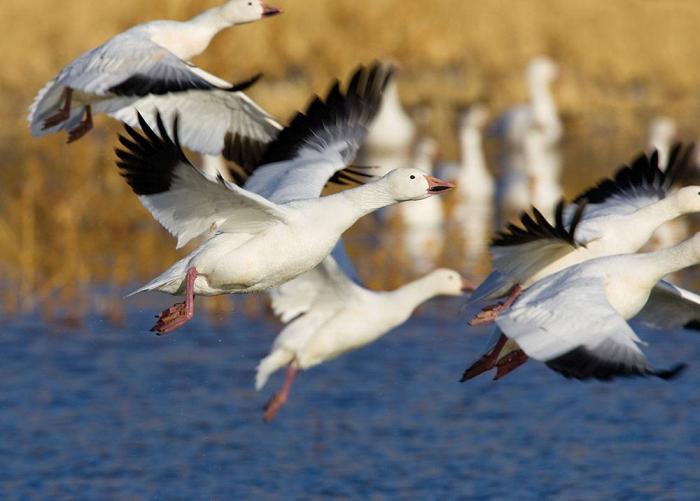
Goose-avian-flu-carrier-1510introductions.jpg
Kenneth Canning/istockphoto | Snow geese are one of the species of waterfowl that could have carried the avian influenza virus from the arctic to the Midwestern U.S.
Avian influenza virus survives indefinitely at freezing temperatures. Halvorson suggested that “freeze-dried” virus in large quantities contaminating the environment is what led to the large number of introductions of the virus from wild bird populations to domestic poultry.
Avian flu virus overwhelms resources
“We failed to understand the potential scope of the outbreak,” Halvorson said. “No one planned for 40 introductions, and that left us short on people and resources. All of the planning was based on getting an introduction, then establishing a control zone and stamping it out.”
At the peak of the outbreak on April 24, 2015, Minnesota had 57 control areas 10 kilometers in diameter each. This put more than 6,000 square miles in control zones -- an area bigger than the entire state of Connecticut and just less than New Jersey. He said that, at that point, it is impossible to do everything right because there are not enough people and other resources.
“The virus was too thick and the control effort was too thin,” he said. The longer it took to depopulate a farm, then the more virus that was shed. Crews of hundreds of people used to depopulate farms had to leave the farm every day, creating the opportunity to carry virus off the farm.
“How are you going to control their contamination level?” Halvorson asked. “The answer is, you can’t.”
He called the situations where crews of inexperienced people were brought onto large farms to accomplish depopulation as quickly as possible a “catastrophe” because you had that many people coming onto and off the infected farm every day and these people had to go back home or to hotels and restaurants each evening, possibly spreading the virus. This has led to the consideration of ventilation shut down as a means of rapid depopulation.
Industry responsible for avian flu control
“When you have a disease outbreak like this, it is the industry that has allowed it to happen,” Halvorson said. “The industry is the only group that can control it. I think we all get the mistaken idea that the government is going to control the disease, that APHIS is going to come in and control the disease. No, that isn’t what they are going to do. They are going to come in and assist you with killing the flock and assist you with your cleaning and disinfection procedures, but they are not going to control the disease. They don’t have the manpower, the wherewithal, the knowledge or the skills to do that.”
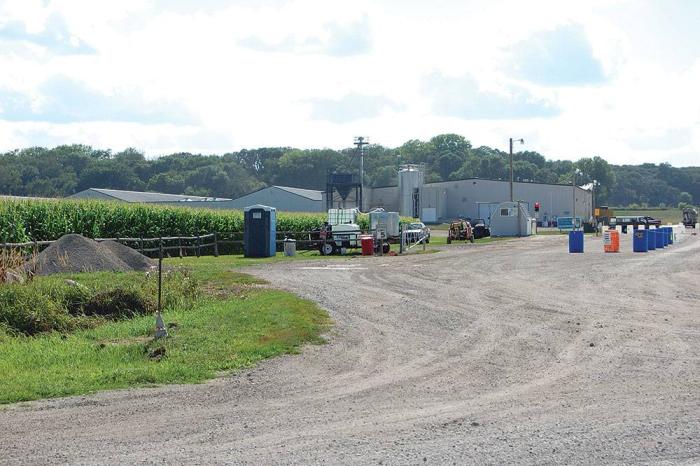
Truck-wash-avian-flu-biosecurity-1510introductions.jpg
Terrence O'Keefe | A high-pressure sprayer at the entrance to this Iowa layer farm provides an example of the improvised biosecurity measures implemented as a result of the avian flu outbreak.
As the outbreak progressed, the virus became better adapted to poultry.
“At the beginning of the outbreak, you had a virus that wasn’t so good at infecting chickens, but by April, the virus was very good at infecting chickens,” Halvorson said.
Avian flu spreading from farm to farm
The 40 introductions of the avian flu virus from the wild onto poultry farms has been confirmed by molecular analysis of the virus isolates, and this analysis has also been used to show the lateral spread from these introductions. Minnesota, North and South Dakota, Wisconsin, Missouri and Arkansas had around 35 introductions from the wild, or index cases, and lateral spread to around 90 more premises. On average, each index case in these states subsequently led to around 2.5 more farms becoming infected with the virus.
In contrast, Iowa appears to have only had two introductions from wild birds, and these each resulted in about 37 other farms becoming infected with the avian flu virus. Halvorson said that one factor that likely contributed to the rapid spread of the virus from farm to farm was the fact that birds could be infected and shed virus in large quantities for five to 10 days prior to mortality increasing.
“So your daily biosecurity has to be pretty good or else you can be inadvertently spreading the virus, and we certainly did that,” he said.
Greatest threat is outside your barn door
Halvorson said biosecurity practices that had worked in the past, which were good enough for Mycoplasma gallisepticum, laryngotracheitis, and low path avian flu, were not enough to protect poultry farms from wild bird introductions of highly pathogenic avian flu. The approximately 40 introductions of avian flu from wild birds was unprecedented. He said that, in most states -- with the exception of Iowa -- biosecurity worked “pretty well” to prevent lateral spread.
The epidemiologic surveys filled out comparing farms that got avian influenza from control farms that didn’t get the disease suggests some associations between certain farm practices and increased risk of getting the disease. But, every farm is different and site-specific biosecurity plans are recommended based on that farm’s circumstances.
There is a consensus on what biosecurity programs for poultry farms need to incorporate, according to Halvorson. He said that each farm’s biosecurity plan needs for someone to be in charge, preferably a veterinarian. There needs to be training for all employees. The biosecurity plan has to incorporate the line of separation; peripheral buffer area; control movement of personnel and equipment, live birds, dead birds, manure and eggs; exclude wild birds from structures on the farm; and be reviewed with an eye toward continuous improvement.
The H5 highly pathogenic avian flu virus that has come to North America from Asia is probably here to stay for at least a few years, according to Halvorson, because the virus has persisted in Asia for 19 years. U.S. poultry producers have to assume that the virus might be just outside the barn door.

Monday, October 12, 2015

6 avian flu news updates for the week ending October 9

The global poultry industry remains highly concerned about avian influenza and its impact on poultry production and trade. Here are 6 news stories from the week ending October 9 concerning the virus:

Year-ending US egg prices may return to normal levels

The number of table egg-laying hens in the U.S. might not fully recover from the losses stemming from the highly pathogenic avian influenza outbreak in the Upper Midwest  until 2017, but don't expect the current run of high wholesale egg prices to last that long.

US poultry exports to Cuba resume

Cuba has resumed imports of U.S. chicken after a trade ban that lasted about two months. 

Avian flu cases continue in Taiwan, Vietnam and Nigeria

Avian influenza cases have been recently reported to the World Organisation for Animal Health (OIE) by veterinary officials in Taiwan, Vietnam and Nigeria.

Northern Ireland government urges poultry registration

The Northern Ireland government is urging poultry owners to register its birds with the Department of Agriculture and Rural Development as part of a biosecurity measure to protect poultry from avian influenza.

Jamaica ag minister committed to keeping avian flu away

The Jamaican government has affirmed its commitment to the poultry industry, stressing that it is doing what it can to protect birds there from potential avian influenza outbreaks.

Ceva warns against rising risks of avian influenza


Dramatic changes in avian influenza (AI) are posing an increasing threat to animal welfare, the global economy and human health.

Thursday, October 1, 2015

Avian flu insurance favored by poultry producers in UK

An avian influenza insurance scheme would be broadly welcome by UK poultry farmers, a survey conducted by the country’s National Farmers’ Union (NFU) has found. U.K. producers are less keen, however, on a hatchery levy to help cover the costs associated with an outbreak of avian influenza.
When questioned, "Depending on the premium, how interested would you be in taking out insurance against the potential occurrence of avian influenza on your farm?" 56.7 percent replied that they would be very interested, with 36.8 percent saying that they would be quite interested.
Only 1.3 percent responded that they would not be interested at all, while the same percentage said they already had insurance.
There was less support, however, for a charge being levied at the hatchery.
When asked whether they would support a charge at the hatchery for day-old chicks to create an industry fund to contribute to the costs associated with the secondary cleaning and disinfection of sheds following an avian outbreak situation, only 39.6 percent of respondents were in favor. There was, however, a large degree of uncertainty among respondents with 44.6 percent said they were not sure, while 9.6 percent were against the idea.
The NFU received 247 responses to its survey, reflecting 11.7 percent of its poultry membership.

Monday, September 28, 2015

6 requirements for avian flu ventilation shutdown

USDA recently authorized the emergency use of ventilation shutdown (VSD) to depopulate poultry flocks affected by avian influenza. The federal agency approved the conditional use of VSD because traditional depopulation methods did not always kill affected birds quickly enough to control the spread of the virus as effectively as desired.
However, special criteria must be met before ventilation shutdown may be used. These are the 6 requirements that must be met:
1. Other depopulation methods are unavailable – More traditional depopulation methods may not be available, or available in a timely manner.
2. High threat of transmission – In some cases, the amplification of the avian influenza virus on the premises could pose a significant threat for further transmission and ongoing spread of the virus.
3. Review by veterinary officials – The Ventilation Shutdown Evidence and Policy document must be reviewed and discussed by officials from USDA's Animal and Plant Health Inspection Service (APHIS), state and/or tribal officials and the Incident Management Team (IMT) before VSD may be utilized.
4. Incident Management Team approval – The IMT must determine that VSD is the most appropriate depopulation method available.
5. State approval – The state animal health official or a designee must concur with the IMT that VSD is the best depopulation method available.
6. National Incident Coordinator approval – The National Incident Coordinator, or a designee, must also agree that ventilation shutdown is the best depopulation method to be used.

Thursday, September 24, 2015

APHIS issues fall avian flu preparedness, response plan

The USDA’s Animal and Plant Health Inspection Service (APHIS) has issued a report on planning and preparations for highly pathogenic avian influenza (HPAI) in advance of a potential recurrence of the disease when birds migrate south this fall.

The HPAI outbreak that devastated poultry producers during the winter and spring of 2015 was the worst animal disease in U.S. history. It affected more than 48.8 million birds and 21 states before the final detection on June 17, according to APHIS. The scope of this outbreak presented many challenges to federal, state and industry resources and clearly identified areas where greater coordination, preparation and communication were needed.  While response operations continue in the Midwest, APHIS and its partners have used the time since the last positive detection to plan for the return of the disease, using a hypothetical worst case scenario in an effort to prepare.

APHIS’ planning activities incorporated its experience from this year’s response effort, our epidemiologic studies, and extensive feedback and input gathered from state partners, industry, academia and other stakeholders. The Fall 2015 HPAI Influenza Preparedness and Response Plan captures the results of this planning effort, organizing information on preparatory activities, policy decisions and updated strategy documents into four key areas:
  • preventing or reducing future outbreaks;
  • enhancing preparedness;
  • improving and streamlining response capabilities; and,
  • preparing for the potential use of AI vaccines.
The report includes an updated biosecurity self-assessment for the poultry industry, streamlined and updated procedures for providing indemnity and other payments, a draft vaccine use strategy and many other items of interest to the Agency’s stakeholders. A copy of the Fall 2015 HPAI Influenza Preparedness and Response Plan and supporting documents are available on the APHIS website.
APHIS stated it is keenly aware of the significant impact the spring outbreak has had on all parties — poultry producers, allied industries, federal and state governments, and the American consumer. As the beginning of the fall season approaches, APHIS is confident that its surveillance programs in commercial and wild birds will enable it to detect the disease early. APHIS’ advanced planning and the preparations undertaken by the states and the poultry industry will help quickly contain the disease. If HPAI should reappear in the coming months, APHIS is ready to respond and committed to helping those affected by the disease.

Tuesday, September 22, 2015

Avian flu vaccine gets USDA conditional license

Harrisvaccines has been granted USDA conditional licensure of the company’s avian influenza vaccine, RNA, the company announced on September 21. This is the first conditional license for highly pathogenic avian influenza (HPAI) granted since the North American outbreak began in 2015.
The USDA generally grants conditional licenses in order to meet an emergency or unmet need. A conditionally licensed product must show a reasonable expectation of efficacy, safety, and potency.
When H5 avian influenza was confirmed in the spring of 2015, Harrisvaccines, an Iowa-based vaccine producer,  applied its rapid response technology to bring a solution to Iowa and Midwest poultry and egg producers, according to Joel Harris, vice president of Harrisvaccines.
The conditional use permit does not authorize the company to sell the vaccine today, but it does put the company in a better position to apply the vaccine in the case that avian influenza should reemerge in the United States, Harris added.

About the RNA vaccine

The RNA vaccine utilizes the rapid response, SirraVax  platform technology, the company stated. This technology allows for the vaccine to be easily updated to match current and future strains of avian influenza. This is an important first step in implementing a vaccine strategy by the USDA.  Initially, however, producers will have to wait for USDA authorization before acquiring the vaccine. The USDA has called for a solicitation to create a vaccine stockpile for H5 avian influenza for the fall; Harrisvaccines is currently pursuing this opportunity.
“The creation, testing, and regulatory approval of the vaccine was a real joint effort by the USDA’s Agriculture Research Service, the Center for Veterinary Biologics, and Harrisvaccines,” said Dr. Mark Mogler, head of Research and Development at Harrisvaccines. “The ARS’ Southeast Poultry Research Laboratory provided both the gene needed to prepare the vaccine at Harrisvaccines and the proper facilities for efficacy testing in chickens.”
“The threat posed by avian influenza is extraordinary to both producers and consumers,” said Dr. Hank Harris, Founder and CEO of Harrisvaccines. “Getting a vaccine in the field that matches 100 percent to the H5N2 strain is crucial to ongoing containment efforts. This vaccine is also compatible with diagnostic tests that can differentiate infected from vaccinated birds (DIVA). This makes our vaccine an important tool for eradication efforts and may alleviate any concerns with trading partners abroad.”
According to Jodi French, head of manufacturing and USDA liaison for Harrisvaccines, USDA testing of the company’s avian influenza vaccine provided both the efficacy and safety data necessary for approval by the USDA Center for Veterinary Biologics. Further efficacy and potency studies in chickens and turkeys are ongoing, French added.

Egg company impacted by avian influenza encouraged by licensure

The USDA's decision to issue the conditional approval to RNA vaccine is encouraging to Rembrandt Enterprises, which lost more than half of its layer flock as a result of avian influenza.
"I am encouraged to see a new and promising vaccine receive USDA licensure," said Dave Rettig, CEO of Rembrandt Enterprises. "The impact of avian influenza on the layer industry in Iowa has been devastating. We need to continue moving toward long-term solutions which include a vaccine strategy that can be mobilized quickly and tailored to the virus strains impacting our farms."

USDA releases avian flu biosecurity self-assessment tool

The USDA’s Animal and Plant Health Inspection Service (APHIS) has released a “Checklist for Self-Assessment of Enhanced Poultry Biosecurity” and related training materials as part of ongoing preparation efforts for the possible return of highly pathogenic avian influenza infections.
These documents will assist the poultry industry in implementing effective biosecurity practices. APHIS collaborated with state, academic and industry experts to develop the checklist and training materials.
The checklist, which is posted on the U.S. Poultry and Egg Association website, asks producers to identify what type of poultry operation they have, the size of the farm and the state where the operation is located. It also asks producers to evaluate the status of biosecurity practices at their farms – whether completed, not in place or in progress – in areas including having a biosecurity officer, the training of employees, lines of separation for each building, perimeter buffer areas, personnel training, protection from wild birds, regular sanitation of equipment and minimal sharing of equipment, dead bird disposal, manure and litter management, obtaining replacement poultry from documented sources, evaluation of water supplies, and storage of feed and replacement littler in areas that reduce the risk of avian influenza infections.
APHIS urges producers to develop a site-specific plan to implement enhanced operational biosecurity as soon as feasible, preferably before October 2015.

Monday, September 21, 2015

Ventilation shutdown for avian flu depopulation approved

The USDA has approved ventilation shutdown as an emergency depopulation method to be used in flocks that have been affected by avian influenza.
The agency on September 18 released documents that explain using ventilation shutdown as a means to depopulate in a suspected case of avian influenza. USDA’s Animal and Plant Health Inspection Service (APHIS), veterinary officials from various states, and poultry industry stakeholders had been studying the use of ventilation shutdown, because a need to expedite the depopulation process had been identified.
The most effective and commonly used depopulation methods had been through use of carbon dioxide and water-based foam. However, at the height of outbreak detections, APHIS stated that the existing methods were insufficient for rapid depopulation and disposal. The longer the depopulation process takes, the greater the risk for the spread of the virus, the agency stated.
According to the APHIS documents, carbon dioxide and water-based foam methods will continue to be the primary methods first considered in an avian influenza response, but if these methods will not achieve depopulation of infected flocks within 24 hours, ventilation shutdown may be considered. However, ventilation shutdown should only be used after a full consideration of the epidemiologic threat posed concludes that no other method can achieve a sufficiently timely measure of assurance that the virus won’t spread.
Further, ventilation shutdown can only be used to depopulate flocks if agreed upon by APHIS officials, state or tribal officials and the incident management team and national incident coordinator.

Wednesday, September 9, 2015

Avian flu impact on Minnesota estimated at $650 million

The economic impact of the 2015 avian influenza outbreak on the Minnesota economy is estimated to be over $650 million, a key lawmaker from the state said.
That assessment was announced by Rep. Collin Peterson, D-Minnesota, in a September 4 email newsletter sent to constituents. According to Peterson, those losses included more than $170 million in lost wages, affecting 2,500 jobs. The Minnesota Turkey Growers Association confirmed those figures to be accurate.
Peterson serves as the ranking member of the House Agriculture Committee.

Avian influenza recovery efforts progressing

About half of the turkey operations in Minnesota that were affected by avian influenza have been repopulated, Peterson added.
Peterson reported that he recently visited with local turkey growers, managers from Minnesota-based turkey company Jennie-O Turkey Store, egg products company Rembrandt Foods, officials from the Minnesota Board of Animal Health, and state legislators. Among topics discussed were recovery efforts, biosecurity measures, vaccine development and lessons learned that can be applied in case a future outbreak occurs.
According to USDA’s Animal and Plant Health Inspection Service (APHIS), Minnesota had 105 detections of avian influenza since the virus was first discovered in the state in March, affecting nearly 9 million birds. The last avian influenza case in Minnesota was confirmed on June 5.

Wednesday, September 2, 2015

Japan lifts some bans on poultry from US, Canada

The Japanese government has lifted trade restrictions on poultry and poultry products from some regions in the United States and Canada where avian influenza had been earlier detected.
Poultry imports from the U.S. states of Arkansas, California, Oregon, Washington, Idaho, Kansas, Montana and Indiana can resume, Japan’s Ministry of Agriculture, Forestry and Fisheries stated on August 28, as well as from the Canadian province of British Columbia.
However, Japan will keep trade restrictions in place for poultry from Minnesota, Iowa, North Dakota, South Dakota, Wisconsin, Missouri and Nebraska, as well as the Canadian province of Ontario, pending local checks by Japanese officials.
There have been no new confirmed cases of avian influenza in the United States since the virus was detected at an Iowa layer farm on June 17. Since December 2014, avian influenza has affected more than 48 million birds in the United States.
It has even been longer since a new case of avian influenza has been reported in Canada, with the last case occurring in Ontario in April. Ontario and British Columbia are the only two provinces with avian influenza cases confirmed. Between those two provinces, an estimated 266,700 birds were affected by avian influenza in Canada.

Monday, August 31, 2015

Iowa State students won’t have access to live poultry

Iowa State University students will not have access to live birds on the university’s poultry farm as a precaution to prevent the spread of highly pathogenic avian influenza.
During the fall semester, students will instead be learning about the poultry industry through videos and textbooks. They will also work with egg and poultry companies to learn more about the industry. The university will also teach students about 2015 avian influenza outbreak as one of the current challenges facing poultry farmers and processors. The decision affects about 500 students.
From December 2014 to June 2015, nearly 48.1 million birds have been affected by avian influenza. No state has had more birds impacted by the virus than Iowa, which has had 31.7 million affected.
A recent study commissioned by the Iowa Farm Bureau Federation estimated that avian influenza cost Iowa $427 million, and was responsible for the loss of about 8,500 jobs.
There have not been any new cases of avian influenza reported in Iowa – or the United States – since USDA Animal and Plant Health Inspection Service (APHIS) confirmed on June 17 that a farm of 1 million layers in Wright County was hit by the virus. However, officials from APHIS are preparing for the return of avian influenza in the fall.

NCC identifies top avian flu biosecurity principles

In preparation for the possible re-emergence of highly pathogenic avian influenza (HPAI) in the United States in the fall as wild birds begin to migrate south from Canada, the National Chicken Council (NCC) has identified the top biosecurity principles for broiler and broiler-breeder producers.
Biosecurity is the poultry industry's first line of defense to all avian diseases, including HPAI. The following biosecurity measures have been identified by NCC, members of the NCC biosecurity working group, veterinarians and avian health experts as the most important to prevent disease spread and promote flock health:
  • Limiting visitors on the farm and minimizing foot traffic;
  • Avoiding contact with wild and domestic fowl;
  • Avoiding the sharing of farm equipment;
  • Having a clean and functioning footbath at each entrance to the broiler house;
  • Ensuring that all visitors or personnel have disinfected or new footwear before entering a house or facility;
  • Making sure feed and water sources are covered and free of contaminants, limiting the attraction of wild fowl and pests;
  • Having official signage clearly stating the farm is a biosecure zone and any unauthorized entry is strictly prohibited;
  • Employing effective pest and wild bird management practices; and
  • Adequately training farmers, farm and company personal in biosecurity and disease prevention. 
"Rigorous implementation of biosecurity principles will be essential to preventing disease introduction onto broiler chicken operations," said NCC President Mike Brown. "I know each industry has been preparing similarly. By maintaining this strong collaboration and sharing of lessons learned, I am confident we will all be in a much better place this year."
These practices are intended to be applicable to a wide variety of production settings, and to serve as a list of recommendations to farmers and associated personnel.

Friday, August 28, 2015

5 avian influenza updates for the week ending August 27

Avian influenza remains an area of high concern for those in the poultry industry. Here are 5 news developments concerning avian influenza that you should know:
1. Emergency depopulation by ventilation shutdown considered – As the U.S. poultry industry prepares for the possible return of avian influenza in the fall, government and industry groups are seeking ways to expedite the depopulation process at farms that have been affected by the virus. Ventilation shutdown is one method under consideration, but United Egg Producers President Chad Gregory stresses that if approved, that method will likely only be used when all other possible depopulation options have been exhausted.
2. NCC names top avian flu biosecurity principles – The National Chicken Council has identified what it considers to be the top biosecurity principles to prevent the spread of avian influenza, should it resurface in the United States. Those include but are not limited to minimizing visitors and foot traffic on the farm, avoiding contact with wild and domestic fowl, not sharing farm equipment, and having a clean and functioning footbath at each broiler house entrance.
3. Iowa State University poultry farm off limits to students – To prevent the spread of avian influenza, Iowa State University has cancelled classes held at its poultry farms, and will instead teach using other means including textbooks and videos.
4. U.S. lifts avian flu-related bans on poultry from Ontario – The USDA has lifted its ban on the import of poultry and poultry products from Ontario, citing that the risk of avian influenza’s spread has been minimized.
5. Ghana urging avian influenza biosecurity – Government officials in Ghana are urging those in the poultry industry to step up biosecurity measures to reduce the spread of avian influenza. Since May, an estimated 24,000 birds in Ghana have been affected by avian influenza.

Friday, August 21, 2015

Utility drivers urged to be mindful of avian influenza

The Pennsylvania Public Utility Commission (PUC) is urging utilities and their truck drivers to understand and practice biosecurity measures when operating on or near poultry farms, as part of a cooperative statewide effort to safeguard against the outbreak of avian influenza.
“While highly pathogenic avian influenza (HPAI) virus does not pose a threat to human health, it can have a devastating impact on the poultry industry, and it is vital for everyone moving around farms to take steps to help prevent the possible spread of this disease,” said PUC Chairman Gladys M. Brown. “The Pennsylvania Department of Agriculture is requesting that all farm service businesses – including utilities – use heightened biosecurity practices when operating around poultry farms. The PUC urges utilities to take this issue seriously.”
According to agriculture officials, avian influenza has not yet been detected in Pennsylvania, but outbreaks have been moving closer and there is a great concern that it may appear in our state this year. Equipment and people that travel from farm to farm may inadvertently spread the virus.
“While we have not been impacted by HPAI yet, we realize that when birds begin migrating this fall that our chances of the virus entering the state increase,” said state Agriculture Secretary Russell Redding. “We have to continue to safeguard our state’s $13 billion poultry industry and a large part of that effort means putting strong biosecurity measures in place. Keeping HPAI at bay requires the assistance of all Pennsylvanians and the hard work of each of us involved in the poultry industry.”
As part of enhanced biosecurity efforts, employees and visitors on some farms (including utility workers) may be asked to take certain actions, such as:
  • Avoiding certain areas on the farms;
  • Allowing tires and parts of vehicles to be sprayed with disinfectant when entering and leaving the property; and
  • Wearing protective clothing, such as disposable boots or coveralls while working on the farm. 
Brown noted that it is important for utilities to be able to access their lines and facilities in order to maintain reliable and safe service. She urged all parties to work cooperatively in addressing this unique biosecurity concern, while also ensuring dependable utility service.

Tuesday, August 18, 2015

Study: Avian flu costing Iowa 8,500 jobs, $427 million

The 2015 avian influenza outbreak is costing Iowa nearly 8,500 jobs, some of which may never be replaced. That’s the finding from a new study, commissioned by the Iowa Farm Bureau Federation (IFBF) and conducted by Decision Innovation Solutions (DIS).
The study shows in addition to job losses, the avian influenza outbreak will cost Iowa – the nation’s largest egg-producing state -- nearly $427 million in lost additional value, more than half of which is income for Iowans.  IFBF Director of Research and Commodity Services Dave Miller said the ripple effects of the lost jobs and revenue could last for up to three years, which will also impact egg and poultry prices, since it takes months to get the birds and the staff back in place.
Egg prices are likely to peak out this summer, but the ‘elevated’ price for eggs is likely to linger for a minimum of 12 months and could last for two to three years. Recovery from this outbreak which devastated Iowa egg and poultry farms will not be swift,” said Miller.
“It’s really astounding that we could lose half of our poultry flock in a couple of months,” Miller said.
While the avian influenza outbreak was first discovered in a small, backyard chicken flock in another state, it cost Iowa the most damage, particularly in the northwest part of the state, since it has the highest population of birds and bird farms.
But, it’s not just poultry farms and poultry farm workers who are at a loss. As farms cut back, other Iowa businesses up and downstream were affected, including veterinarians, trucking companies, processors and lenders, the study shows.  It also means nearly $427 million in value-added income was lost, because grain farmers and other businesses that sell their feed and other goods and services to poultry farms couldn’t continue to make and sell products and services like they did before the outbreak.  Miller also said that many of the egg farm workers who lost their jobs are moving away to seek employment in other towns or other industries. That means replacing the labor pool won’t be easy.
“As for the future risk, the entire industry is reviewing all of their biosecurity protocols, but since about 16 percent of all wild water fowl are carriers of avian influenza, the potential for exposure is difficult to eliminate.  Farms are working to minimize contact of their birds with wild birds, but it is very difficult to keep out sparrows, starlings, and everything that migrates over these barns,” said Miller.

Low pathogenic H5N2 avian flu hits Mexican layer farm

A low pathogenic strain of H5N2 avian influenza has been detected in a commercial layer operation in El Rosario, in the Mexican state of Sinaloa.
The outbreak was announced by the World Organisation for Animal Health (OIE) on August 14.
No birds died as a result of contracting the avian influenza virus, but an estimated 433,093 chickens were reported as susceptible.
According to OIE, epidemiological surveillance activities were carried out by the Veterinary Services of Mexico, and the presence of H5N2 avian influenza in the flock was identified. Intravenous pathogenicity tests revealed that it was a low pathogenic form of the virus.
The egg production unit where the virus was found has been quarantined and a sanitary barrier has been set up. Despite the virus being a form of low pathogenic avian influenza, the birds will be euthanized, OIE reported.
Tests were conducted at three other commercial poultry farms and 33 backyard flocks within 10 kilometers of the affected farm, and those tests revealed no evidence that the virus had spread.
OIE  stated that the source of infection has not yet been determined. Weekly follow-up reports on the avian influenza case will be submitted by OIE until it is resolved.

Monday, August 10, 2015

5 avian influenza updates for the week ending August 6

Friday, August 7, 2015

1st Iowa turkey farm restocked after avian flu infection

Wednesday, August 5, 2015

Avian flu leads to turkey deli meat shortage, stores say