With no confirmed cases in Ohio and no immediate threat of a Highly Pathogenic Avian Influenza outbreak, Ohio Agriculture Director David T. Daniels and State Veterinarian Dr. Tony Forshey have rescinded the order prohibiting bird shows in Ohio. Officials urge poultry and bird owners, however, to remain vigilant and cautious in order to protect the health of their flocks during migration seasons.
The order, issued on June 2, was originally intended to remain in place until April 2016. The ban included county and independent fairs, the Ohio State Fair, and all other gatherings of birds for show or for sale, including auctions and swap meets. Throughout the nationwide outbreak, the department worked closely with Ohio’s poultry producers and the USDA’s Animal and Plant Health Inspection Service to provide training and to closely monitor the health of poultry in the state.
“Ohio is home to more than 50 million domestic birds, which makes our state particularly vulnerable to an outbreak. Thankfully, the disease never took hold here. I believe this is a justification of the steps taken by our producers and exhibitors to mitigate the risk of an outbreak,” said Director Daniels.
The USDA first confirmed the avian flu virus in the U.S. beginning in late 2014. While there were no confirmed cases of the disease in Ohio, throughout the spring and summer of 2015 more than 48 million birds nationally were affected. On Nov. 18, the OIE issued its final report on the deadly avian flu which declared that the outbreaks in all affected states are now final, closed and resolved. This now makes the U.S. free of avian influenza for the time being.
One of the ways avian influenza spreads is by direct contact with contaminated materials coming from other infected birds. Exhibitions, auctions and swap meets where birds are co‐mingling pose a high risk of unintentionally spreading disease. While the intention is to allow bird exhibitions to be held next year, an outbreak in Ohio or nearby states may require the reinstatement or even an extension of the ban.
“I would like to extend a sincere thank you to OSU Extension and the youth exhibitors for their understanding and to their advisors for turning this unfortunate outbreak into an important educational moment. As I travelled around the state this summer, I was overwhelmed with the maturity and understanding of the disappointed but supportive young people I spoke with who were unable to bring their poultry projects to the fair. It’s a real testament to the strength and importance our 4H and FFA programs in Ohio,” said Director Daniels.
Showing posts with label US poultry Industry. Show all posts
Showing posts with label US poultry Industry. Show all posts
Thursday, December 31, 2015


Wednesday, December 23, 2015
North Dakota lifts ban on poultry gathering
North Dakota's Board of Animal Health has rescinded an order to halt bird movement to shows, exhibitions and public sales within the state.
The ban was put into place in April of this year to help protect North Dakota’s poultry industry during the midst of a nationwide outbreak of avian influenza. North Dakota had two confirmed cases of avian influenza in commercial poultry operations, which affected over 130,000 birds. Nationally, the outbreak affected over 48 million birds in 15 states.
Although the ban is lifted, State Veterinarian Dr. Susan Keller reminds bird owners to immediately report unusual death loss to their local and state veterinarian, restrict access to their property, prevent contact between their birds and wild birds and practice enhanced biosecurity.
Anyone bringing birds into North Dakota should contact the North Dakota Department of Agriculture’s Animal Health Division at 701-328-2655 to ensure they are meeting all importation requirements.
More information about avian influenza and biosecurity is available at www.nd.gov/ndda/disease/avian-influenza and from the USDA-APHIS at www.aphis.usda.gov.
The ban was put into place in April of this year to help protect North Dakota’s poultry industry during the midst of a nationwide outbreak of avian influenza. North Dakota had two confirmed cases of avian influenza in commercial poultry operations, which affected over 130,000 birds. Nationally, the outbreak affected over 48 million birds in 15 states.
Although the ban is lifted, State Veterinarian Dr. Susan Keller reminds bird owners to immediately report unusual death loss to their local and state veterinarian, restrict access to their property, prevent contact between their birds and wild birds and practice enhanced biosecurity.
Anyone bringing birds into North Dakota should contact the North Dakota Department of Agriculture’s Animal Health Division at 701-328-2655 to ensure they are meeting all importation requirements.
More information about avian influenza and biosecurity is available at www.nd.gov/ndda/disease/avian-influenza and from the USDA-APHIS at www.aphis.usda.gov.
Monday, December 21, 2015
Kansas lifts ban on poultry exhibitions
The Kansas Department of Agriculture announced on Dec. 4 that it will be lifting the ban placed on poultry exhibitions and other events where birds are gathered or co-mingled.
The order, signed by Secretary of Agriculture Jackie McClaskey on June 9, was implemented in an effort to prevent the spread of highly pathogenic H5N2 avian influenza (HPAI) and protect poultry health in Kansas, which experienced a positive case of HPAI in Leavenworth County in 2015. Secretary McClaskey, in consultation with Kansas Animal Health Commissioner Dr. Bill Brown, lifted the ban as a result of no new cases of HPAI in Kansas since March 2015.
While the ban is lifted, Dr. Brown continues to encourage all poultry owners to monitor their flocks and maintain good biosecurity practices. For additional information about HPAI and the response efforts in Kansas, go here.
Monday, December 7, 2015
Poultry growers vulnerable as fall migration threatens avian flu
Contract poultry growers in the U.S. remain vulnerable as they await the possible arrival of the avian flu to make its appearance in the fall migration. Having started in September, the migration could continue through March 2016, and the avian flu is likely to appear in all U.S. flyways. Two Mississippi senators recently made a call to action knowing the issues poultry growers and the industry face.
U.S. Sens. Thad Cochran and Roger Wicker, along with eight other senators from Alabama, Arkansas, Louisiana and Georgia, signed a letter to Secretary of Agriculture Tom Vilsack requesting action be taken to guarantee the sustainability of the poultry industry should outbreaks of avian flu occur this fall. These actions touch on the financial vulnerability growers face due to indemnity payment regulations; and request financial flexibility to growers in devastating cases and offer special remedies to prevent foreclosures. The letter was signed November 5, and submitted as the U.S. Department of Agriculture implements its Fall 2015 Highly Pathogenic Avian Influenza (HPAI) Preparedness and Response Plan.
Under current USDA regulations, there is no compensation for poultry growers in the event of destruction of flocks due to infection of HPAI. The USDA compensates owners for such losses; however its current regulations do not take growers into consideration, in the case of contract broiler operations.
The USDA delivered over $190 million in indemnification payments to producers from the HPAI outbreaks earlier this year. However, contract poultry growers were not reimbursed for their losses under the indemnification program.
“This year we have an abnormal environmental year from a migratory bird stand point. Much warmer summer and fall; we have yet to see big arctic air masses pushing south, thus migration has been delayed. Reality is we are early in migration season to let down our guard and should keep that in mind as we move further into the season. The longer the birds are intermingling in Canada, the greater the chance for transmission among larger number of birds that could increase prevalence of [highly pathogenic] viruses as they move south,” said DiLiberto.
In June Vilsack addressed a congressional oversight committee regarding allocating funds for an insurance program for farmers affected by avian influenza. Vilsack said he thinks such an insurance program was left off the most current farm bill for budgetary reasons.
Poultry growers have the option to purchase an avian influenza business interruption and loss of income insurance policy. Each policy should be reviewed to ensure it covers all subtypes of HPAI. The DPI has provided this, and other tips for poultry growers who are considering avian influenza business interruption and loss of income insurance.
The USDA has continued to stress the importance of prevention as part of avian flu preparedness, urging growers to implement a biosecurity program with their flocks as a preventative measure.
U.S. Sens. Thad Cochran and Roger Wicker, along with eight other senators from Alabama, Arkansas, Louisiana and Georgia, signed a letter to Secretary of Agriculture Tom Vilsack requesting action be taken to guarantee the sustainability of the poultry industry should outbreaks of avian flu occur this fall. These actions touch on the financial vulnerability growers face due to indemnity payment regulations; and request financial flexibility to growers in devastating cases and offer special remedies to prevent foreclosures. The letter was signed November 5, and submitted as the U.S. Department of Agriculture implements its Fall 2015 Highly Pathogenic Avian Influenza (HPAI) Preparedness and Response Plan.
Under current USDA regulations, there is no compensation for poultry growers in the event of destruction of flocks due to infection of HPAI. The USDA compensates owners for such losses; however its current regulations do not take growers into consideration, in the case of contract broiler operations.
The USDA delivered over $190 million in indemnification payments to producers from the HPAI outbreaks earlier this year. However, contract poultry growers were not reimbursed for their losses under the indemnification program.
Poultry industry warned not to let guard down amid delayed migration season
At the Delmarva Poultry Industry, Inc. (DPI) National Meeting on Poultry Health, Processing, and Live Production, held on October 13, Tom DiLiberto of the U.S. Fish and Wildlife Service spoke on the role of wildlife regarding HPAI. During his presentation DiLiberto discussed the importance of migratory patterns of birds and how patterns are not just dependent on species but the year and the environmental conditions that persist. Movements of birds are not as simple as often portrayed, he added.“This year we have an abnormal environmental year from a migratory bird stand point. Much warmer summer and fall; we have yet to see big arctic air masses pushing south, thus migration has been delayed. Reality is we are early in migration season to let down our guard and should keep that in mind as we move further into the season. The longer the birds are intermingling in Canada, the greater the chance for transmission among larger number of birds that could increase prevalence of [highly pathogenic] viruses as they move south,” said DiLiberto.
In June Vilsack addressed a congressional oversight committee regarding allocating funds for an insurance program for farmers affected by avian influenza. Vilsack said he thinks such an insurance program was left off the most current farm bill for budgetary reasons.
Poultry growers have the option to purchase an avian influenza business interruption and loss of income insurance policy. Each policy should be reviewed to ensure it covers all subtypes of HPAI. The DPI has provided this, and other tips for poultry growers who are considering avian influenza business interruption and loss of income insurance.
The USDA has continued to stress the importance of prevention as part of avian flu preparedness, urging growers to implement a biosecurity program with their flocks as a preventative measure.
Wednesday, December 2, 2015
OIE: US can declare itself free of H5N2 avian influenza
The highly pathogenic H5N2 avian influenza outbreak that first struck the United States in December 2014 and continued to affect U.S. poultry flocks through June is considered to be resolved, according to the the World Organisation for Animal Health (OIE).
According to a recent OIE report, the H5N2 avian influenza outbreaks in Arkansas, California, Idaho, Indiana, Iowa, Kansas, Minnesota, Missouri, Montana, Nebraska, North Dakota, Oregon, South Dakota, Washington and Wisconsin are now “final, closed, and resolved.” OIE further stated that in accordance with its Terrestrial Animal Health Code Chapter 10.4, the U.S. has completely fulfilled the necessary actions and surveillance requirements to self-declare itself free of H5N2 avian influenza.
The virus was first confirmed in the U.S. in December 2014 in wild pintail ducks found in Whatcom County, Washington, while the last case of H5N2 avian influenza was discovered in June a layer flock of about 1 million birds in Iowa.
While it has been more than five months since any new cases of the virus have been reported, the USDA’s Animal and Plant Health Inspection Service (APHIS) is preparing for its possible return in the coming weeks as wild birds make their southward migration. Officials with APHIS, as well as various state agriculture and wildlife agencies, continue to conduct surveillance in poultry and in wild birds.
According to a recent OIE report, the H5N2 avian influenza outbreaks in Arkansas, California, Idaho, Indiana, Iowa, Kansas, Minnesota, Missouri, Montana, Nebraska, North Dakota, Oregon, South Dakota, Washington and Wisconsin are now “final, closed, and resolved.” OIE further stated that in accordance with its Terrestrial Animal Health Code Chapter 10.4, the U.S. has completely fulfilled the necessary actions and surveillance requirements to self-declare itself free of H5N2 avian influenza.
The virus was first confirmed in the U.S. in December 2014 in wild pintail ducks found in Whatcom County, Washington, while the last case of H5N2 avian influenza was discovered in June a layer flock of about 1 million birds in Iowa.
While it has been more than five months since any new cases of the virus have been reported, the USDA’s Animal and Plant Health Inspection Service (APHIS) is preparing for its possible return in the coming weeks as wild birds make their southward migration. Officials with APHIS, as well as various state agriculture and wildlife agencies, continue to conduct surveillance in poultry and in wild birds.
Monday, November 16, 2015
West Virginia ban on live poultry gathering lifted
West Virginia’s Commissioner of Agriculture Walt Helmick has lifted his order that banned gatherings of live poultry since mid-May.
The ban was initiated in mid-May in the wake of an Avian Influenza (AI) outbreak that affected 21 states and 50 million birds. The outbreak eventually became the largest animal health incident in U.S. history.
Although human health was never at risk, the economic impact of the disease was immense. “We are still urging all poultry producers to be on high alert for signs of Avian Influenza in their flocks, whether they have commercial poultry houses or just a small backyard flock,” said Commissioner Helmick.
“The WVDA continues to monitor the animal disease situation at the national and international level on a daily basis and this ban could be imposed again at any time,” he added.
No new cases of AI have been reported since mid-June when the U.S. Department of Agriculture (USDA) concluded response actions at affected farms. However, experts think wild birds may continuously carry such viruses and the risk for a reappearance in domesticated fowl is a distinct possibility.
Although West Virginia was not among the states affected earlier this year, its most valuable agriculture sector is commercial poultry. The broiler (meat chicken) industry is centered in the Eastern Panhandle, near the Pilgrim’s Pride processing plant in Moorefield. The poultry sector also includes meat turkeys and egg production associated with both types of birds. USDA estimates the combined value at $355 million. A substantial turkey genetics operation in Greenbrier County is not included in USDA’s statistics.
The West Virginia Department of Agriculture (WVDA) tests every commercial flock for AI before they are moved from their houses, ensuring that sick birds are not trucked past other poultry farms in the region.
“We have the staff and equipment to turn samples around within four hours, which is something the industry really appreciates,” said State Veterinarian Dr. Jewell Plumley. Any presumptive positive tests must be confirmed by USDA’s National Veterinary Service Laboratory, she noted.
Because they typically roam outdoors, backyard flocks are more likely to come into contact with wild birds that serve as reservoirs for AI viruses. Commercial poultry are housed indoors exclusively, which reduces the chance of coming into contact with wild birds or the waterways they frequent.
Biosecurity practices to prevent the introduction or spread of Avian Influenza are important to both commercial and backyard poultry farms.
Recommended biosecurity practices include:
The ban was initiated in mid-May in the wake of an Avian Influenza (AI) outbreak that affected 21 states and 50 million birds. The outbreak eventually became the largest animal health incident in U.S. history.
Although human health was never at risk, the economic impact of the disease was immense. “We are still urging all poultry producers to be on high alert for signs of Avian Influenza in their flocks, whether they have commercial poultry houses or just a small backyard flock,” said Commissioner Helmick.
“The WVDA continues to monitor the animal disease situation at the national and international level on a daily basis and this ban could be imposed again at any time,” he added.
No new cases of AI have been reported since mid-June when the U.S. Department of Agriculture (USDA) concluded response actions at affected farms. However, experts think wild birds may continuously carry such viruses and the risk for a reappearance in domesticated fowl is a distinct possibility.
Although West Virginia was not among the states affected earlier this year, its most valuable agriculture sector is commercial poultry. The broiler (meat chicken) industry is centered in the Eastern Panhandle, near the Pilgrim’s Pride processing plant in Moorefield. The poultry sector also includes meat turkeys and egg production associated with both types of birds. USDA estimates the combined value at $355 million. A substantial turkey genetics operation in Greenbrier County is not included in USDA’s statistics.
The West Virginia Department of Agriculture (WVDA) tests every commercial flock for AI before they are moved from their houses, ensuring that sick birds are not trucked past other poultry farms in the region.
“We have the staff and equipment to turn samples around within four hours, which is something the industry really appreciates,” said State Veterinarian Dr. Jewell Plumley. Any presumptive positive tests must be confirmed by USDA’s National Veterinary Service Laboratory, she noted.
Because they typically roam outdoors, backyard flocks are more likely to come into contact with wild birds that serve as reservoirs for AI viruses. Commercial poultry are housed indoors exclusively, which reduces the chance of coming into contact with wild birds or the waterways they frequent.
Biosecurity practices to prevent the introduction or spread of Avian Influenza are important to both commercial and backyard poultry farms.
Recommended biosecurity practices include:
- Minimizing farm visitors. AI can survive on vehicle tires, footwear – even in the nasal passages of humans.
- Clean and disinfect shoes, clothes, hands and tires before entering production areas. A squirt of disinfectant is not adequate. Clean all visible dirt before disinfecting to be safe.
- Don’t share farm equipment during AI outbreaks.
- Be on the lookout for signs of disease (unusual bird deaths, sneezing, nasal discharge, diarrhea, poor appetite, drop in egg production, purple discoloration of wattles, comb and legs).
- Call the WVDA if you think your birds might be sick. Call the Moorefield office at 304-538-2397 during regular business hours. Call 304-558-2214 and leave a message after regular business hours. Click here for more information on poultry biosecurity.
CEO: Hain Pure Protein segment ‘is on fire’
Hain Celestial President and CEO Irwin Simon indicated less than two month ago that he expects the company he oversees to become a growing player in the U.S. poultry industry. Speaking again during the company’s quarterly earnings call on November 5, he backed up those words, revealing that plans for a new poultry plant are in the works.
The organic and natural foods company recorded record revenues and sales during the first quarter of fiscal year 2016, and Simon pointed out that Hain Pure Protein, the company’s poultry segment, had a lot to do with that success, with its FreeBird and Plainville Farms brands growing 27 percent.
“We’ve had unbelievable demand from many, many retailers,” said Simon. “Here is a category that is on fire.”
Simon is confident the 25 percent increase in capacity will be easily met, stating, “The demand is there. We can sell all we can get.”
The organic and natural foods company recorded record revenues and sales during the first quarter of fiscal year 2016, and Simon pointed out that Hain Pure Protein, the company’s poultry segment, had a lot to do with that success, with its FreeBird and Plainville Farms brands growing 27 percent.
“We’ve had unbelievable demand from many, many retailers,” said Simon. “Here is a category that is on fire.”
New poultry plant to be added
To meet the demand for its poultry products, Hain Pure Protein is planning to build a new broiler plant. This would help the company increase its capacity by 25 percent, Simon said. Simon said he expected to have the plant online in the third quarter of 2016, but did not elaborate further about the plant. When contacted after the conference call, company officials said more information regarding the potential plant would be coming soon.Simon is confident the 25 percent increase in capacity will be easily met, stating, “The demand is there. We can sell all we can get.”
Holiday turkey sales expected to be high
With the growing demand for antibiotic-free (ABF) turkey, Simon is anticipating a surge in sales for its Plainville Farms turkey brand during the Thanksgiving and Christmas holidays. “We’re entering our biggest turkey and ABF meat season with the up and coming holiday in November and December. This year, we will sell over 1.8 million turkeys for this year’s Thanksgiving,” he said.Tuesday, November 10, 2015
Iowa lifts all avian flu quarantines on commercial farms
All avian influenza-related quarantines affecting commercial egg and turkey farms have been lifted, the state’s agriculture department announced on November 6.
Earlier in 2015, 72 commercial poultry farms in Iowa had been placed under quarantine after having confirmed cases of highly pathogenic avian influenza, with the last case being confirmed June 17 in a commercial layer flock in Wright County.
However, the Iowa Department of Agriculture and Land Stewardship revealed that all of the affected farms are now eligible to restock their flocks after completing the cleaning and disinfection process, and finishing the required 21-day period following disinfection with no detections of the virus. Some farms have already began the repopulation process, with the repopulating of the first turkey farm in Iowa beginning in early August.
While all commercial poultry facilities are now eligible to repopulate, quarantines remain on five backyard operations. According to the state agency, backyard facilities must undergo a 180-day period following depopulation before quarantines can be lifted and repopulation can begin. The backyard operations are expected to be able to come off of quarantine in December.
Iowa had more birds affected by avian influenza than any other state, with 31.7 million birds impacted in 2015. The state’s first case was confirmed on April 19, the USDA’s Animal and Plant Health Inspection Service (APHIS) reported.
Earlier in 2015, 72 commercial poultry farms in Iowa had been placed under quarantine after having confirmed cases of highly pathogenic avian influenza, with the last case being confirmed June 17 in a commercial layer flock in Wright County.
However, the Iowa Department of Agriculture and Land Stewardship revealed that all of the affected farms are now eligible to restock their flocks after completing the cleaning and disinfection process, and finishing the required 21-day period following disinfection with no detections of the virus. Some farms have already began the repopulation process, with the repopulating of the first turkey farm in Iowa beginning in early August.
While all commercial poultry facilities are now eligible to repopulate, quarantines remain on five backyard operations. According to the state agency, backyard facilities must undergo a 180-day period following depopulation before quarantines can be lifted and repopulation can begin. The backyard operations are expected to be able to come off of quarantine in December.
Iowa had more birds affected by avian influenza than any other state, with 31.7 million birds impacted in 2015. The state’s first case was confirmed on April 19, the USDA’s Animal and Plant Health Inspection Service (APHIS) reported.
Friday, November 6, 2015
Deadly bird flu flying South for winter
By now, most of the general public are familiar with the Avian Influenza virus, or Bird Flu as it is commonly referred. This is due in large part to the national outbreak of the virus this spring in the Pacific Northwest and throughout the Midwest.
Since the first reported case of the virus back in December 2014, more than 49,000,000 chickens and turkeys have died or were euthanized across 15 states in the U.S. And while those numbers sound bad, they don't stop there:
"Even one infected chicken house could have a global impact," said Mark Leggett, president of the Mississippi Poultry Association. "One of the worst impacts from the Avian Flu in the U.S. is the impact on global trade. We export a large percentage of poultry products to other countries around the world. Once these countries heard that Avian Influenza had reached America, some stopped importing U.S. chicken. Industry trading partners are reluctant to import any poultry products from the United States."
"Fortunately, the strain of Avian Influenza detected in this country doesn't affect humans, nor is it present on processed poultry products, and to date there have been no commercial broiler flocks affected in the U.S. In fact, all poultry flocks in the United States are tested prior to processing to make sure they are healthy and free of any virus." Leggett continued. "American consumers have a high degree of confidence in the safety of our food supply, and that confidence is well placed."
The Avian Influenza challenge is not over. As fall approaches and brings with it cooler weather, the ideal climate for virus survival, both state and federal agencies, as well as industry representatives and wildlife experts are all working in tandem to mitigate the catastrophic ramifications of another outbreak like the one seen earlier this spring. These measures include ramping up their biosecurity methods at all facilities across the country.
"There is a lot of preparation and coordination happening at every level," said Dr. Phil Stayer, Corporate Veterinarian for Sanderson Farms, the country's third largest poultry producer.
"Within every state that we operate, Texas, Georgia, Mississippi and North Carolina, there are both state and federal plans in place in the event of a reported infection. All state plans must meet the federal minimum standard; however, Sanderson Farms goes well above and beyond the federal minimum standard.
"Once there is a report of the virus, a cascade of events will be set into motion, already scripted out from the state and federal plan, including, quarantines, depopulation and limited movement," Stayer continued.
Also according to Dr. Stayer, since 2014, Sanderson Farms has been sending frequent communications to its employees and growers to remind them of the risk of Avian Influenza and stress the importance of strict adherence to the company's biosecurity measures. Since the outbreak this spring, the company has updated its current biosecurity measures as the industry learned more about the virus.
"Previously we thought the virus was primarily spread by coming up the driveway, transmitted from farm-to-farm by service vehicles and on equipment. Now we realize it’s spread as waterfowl fly overhead, meaning it can easily be picked up by simply walking in your yard through duck droppings," said Stayer. "This means we have had to change our entire mindset from just farm-by-farm, to one that is house-by-house. All of which means much tighter security."
Experts around the country are paying particularly close attention to migrating waterfowl as the fall/winter migration season begins.
"This particular strain of Avian Flu affects all bird species who contract the virus and most birds that get it will get sick and die. However, waterfowl like geese and ducks don't necessarily get sick and can carry the virus for longer periods of time and from place to place as they migrate," said Dr. Kenneth Angel with USDA's veterinary services for Louisiana and Mississippi.
"Other birds can get the virus, but they don't spread the virus long distances because they get too sick to fly, while some are able to spread the virus on their feet or feathers without actually becoming sick.
We know that waterfowl are the main carriers of the virus so that is where we are concentrating our efforts. We also know the virus does not survive well in warm temperatures, which may account for why we didn't see large outbreaks during the spring months in the southern portion of the U.S. However, now that the temperatures are dropping and the birds are beginning to leave their nesting grounds in the North and Midwest, we see the greatest potential for impact in the November/December timeframe."
Houston Havens, Mississippi Department of Wildlife Fisheries and Parks Waterfowl Program Leader, said, "The South is just starting to see some of the early migrants, the Blue Winged Teal, arriving now in fairly decent numbers. However, the peak of migration won't be until mid January."
Havens went on to say, "Migration varies by species and other variables. Cold weather will play a large role in the intensity of migration. Birds can tolerate the cold but long periods of extended cold weather and snow that covers food and other resources will cue up birds to head south to overwinter."
Since the first reported case of the virus back in December 2014, more than 49,000,000 chickens and turkeys have died or were euthanized across 15 states in the U.S. And while those numbers sound bad, they don't stop there:
- As many as 233,000 poultry farms were affected across the U.S.
- Since the outbreak, the wholesale prices for table eggs jumped 84 percent
- 75 countries have either a full or partial ban on U.S. poultry exports
- The lost revenue in U.S. poultry exports reached nearly $390 million in the first quarter
"Even one infected chicken house could have a global impact," said Mark Leggett, president of the Mississippi Poultry Association. "One of the worst impacts from the Avian Flu in the U.S. is the impact on global trade. We export a large percentage of poultry products to other countries around the world. Once these countries heard that Avian Influenza had reached America, some stopped importing U.S. chicken. Industry trading partners are reluctant to import any poultry products from the United States."
"Fortunately, the strain of Avian Influenza detected in this country doesn't affect humans, nor is it present on processed poultry products, and to date there have been no commercial broiler flocks affected in the U.S. In fact, all poultry flocks in the United States are tested prior to processing to make sure they are healthy and free of any virus." Leggett continued. "American consumers have a high degree of confidence in the safety of our food supply, and that confidence is well placed."
The Avian Influenza challenge is not over. As fall approaches and brings with it cooler weather, the ideal climate for virus survival, both state and federal agencies, as well as industry representatives and wildlife experts are all working in tandem to mitigate the catastrophic ramifications of another outbreak like the one seen earlier this spring. These measures include ramping up their biosecurity methods at all facilities across the country.
"There is a lot of preparation and coordination happening at every level," said Dr. Phil Stayer, Corporate Veterinarian for Sanderson Farms, the country's third largest poultry producer.
"Within every state that we operate, Texas, Georgia, Mississippi and North Carolina, there are both state and federal plans in place in the event of a reported infection. All state plans must meet the federal minimum standard; however, Sanderson Farms goes well above and beyond the federal minimum standard.
"Once there is a report of the virus, a cascade of events will be set into motion, already scripted out from the state and federal plan, including, quarantines, depopulation and limited movement," Stayer continued.
Also according to Dr. Stayer, since 2014, Sanderson Farms has been sending frequent communications to its employees and growers to remind them of the risk of Avian Influenza and stress the importance of strict adherence to the company's biosecurity measures. Since the outbreak this spring, the company has updated its current biosecurity measures as the industry learned more about the virus.
"Previously we thought the virus was primarily spread by coming up the driveway, transmitted from farm-to-farm by service vehicles and on equipment. Now we realize it’s spread as waterfowl fly overhead, meaning it can easily be picked up by simply walking in your yard through duck droppings," said Stayer. "This means we have had to change our entire mindset from just farm-by-farm, to one that is house-by-house. All of which means much tighter security."
Experts around the country are paying particularly close attention to migrating waterfowl as the fall/winter migration season begins.
"This particular strain of Avian Flu affects all bird species who contract the virus and most birds that get it will get sick and die. However, waterfowl like geese and ducks don't necessarily get sick and can carry the virus for longer periods of time and from place to place as they migrate," said Dr. Kenneth Angel with USDA's veterinary services for Louisiana and Mississippi.
"Other birds can get the virus, but they don't spread the virus long distances because they get too sick to fly, while some are able to spread the virus on their feet or feathers without actually becoming sick.
We know that waterfowl are the main carriers of the virus so that is where we are concentrating our efforts. We also know the virus does not survive well in warm temperatures, which may account for why we didn't see large outbreaks during the spring months in the southern portion of the U.S. However, now that the temperatures are dropping and the birds are beginning to leave their nesting grounds in the North and Midwest, we see the greatest potential for impact in the November/December timeframe."
Houston Havens, Mississippi Department of Wildlife Fisheries and Parks Waterfowl Program Leader, said, "The South is just starting to see some of the early migrants, the Blue Winged Teal, arriving now in fairly decent numbers. However, the peak of migration won't be until mid January."
Havens went on to say, "Migration varies by species and other variables. Cold weather will play a large role in the intensity of migration. Birds can tolerate the cold but long periods of extended cold weather and snow that covers food and other resources will cue up birds to head south to overwinter."
Monday, October 26, 2015
'Extraordinary' avian flu precautions at Sanderson Farms
Sanderson Farms has not had any cases of avian influenza at any of its farms or facilities in 2015, and the company is taking every extra precaution to make sure that the virus continues to stay away, company CEO Joe Sanderson Jr., said during the Sanderson Farms Investor Conference, held on October 16.
According to Sanderson, company officials have been communicating with its growers every month for the past year, and everyone at those farms has an understanding that the main way to protect the farms against avian influenza is to limit traffic on the farms and to prevent cross-contamination from a maintenance worker, truck or other piece of equipment that may have been an another farm previously.
But even common, everyday things can put a farm at risk, he said.
“It’s so very simple to prevent, but it is so very simple to occur,” said Sanderson. “The farmer can go to the grocery store in his boots and go through the grocery store or service station and cross paths with some hunters who have been out hunting geese out in the field … and go back to his farm and not go through his footbath and boom. It’s a very virulent disease, and that farm is gone.”
Sanderson Farms has a camp in Arkansas that it takes customers to 45 days out of the 60-day season, Sanderson said, but as a precaution, it is not taking any of the company’s planes to the location this eyar. Instead, it is chartering flights “so our planes be clean.”
“We’re doing extraordinary things to protect our flocks,” he said.
Sanderson also mentioned that the two families of geese at his home farm have all been tested for avian influenza.
But when he arrived home one day, those geese he keeps were joined by some wild Canada geese, bringing his goose population to about 60.
“I can’t test all of them,” he said. “I’m going to have to shoo them off as kindly as I can.”
According to Sanderson, company officials have been communicating with its growers every month for the past year, and everyone at those farms has an understanding that the main way to protect the farms against avian influenza is to limit traffic on the farms and to prevent cross-contamination from a maintenance worker, truck or other piece of equipment that may have been an another farm previously.
But even common, everyday things can put a farm at risk, he said.
“It’s so very simple to prevent, but it is so very simple to occur,” said Sanderson. “The farmer can go to the grocery store in his boots and go through the grocery store or service station and cross paths with some hunters who have been out hunting geese out in the field … and go back to his farm and not go through his footbath and boom. It’s a very virulent disease, and that farm is gone.”
Sanderson Farms taking extra precautions concerning hunters, wild birds
The potential spread of avian influenza through wild birds has Sanderson Farms officials particularly protective, considering Sanderson has two families of geese on the farm where he lives. Adding to the risk is the fact that duck hunting is a popular form of entertainment for Sanderson Farms and the people it does business with.Sanderson Farms has a camp in Arkansas that it takes customers to 45 days out of the 60-day season, Sanderson said, but as a precaution, it is not taking any of the company’s planes to the location this eyar. Instead, it is chartering flights “so our planes be clean.”
“We’re doing extraordinary things to protect our flocks,” he said.
Sanderson also mentioned that the two families of geese at his home farm have all been tested for avian influenza.
But when he arrived home one day, those geese he keeps were joined by some wild Canada geese, bringing his goose population to about 60.
“I can’t test all of them,” he said. “I’m going to have to shoo them off as kindly as I can.”
Friday, October 23, 2015
Mountaire building new corporate offices in Delaware
Mountaire Farms has broken ground on its new corporate offices being built in Millsboro, Delaware.
The new building will be 45,000-square-feet and incorporate multiple modern energy-efficient technologies according to John Wren, Mountaire’s chief engineer on the project.
The new building, which will be located at the corner of Maryland Camp Road and John J. Williams Highway, should take about one year to finish and should be ready for the ribbon cutting in the fall of 2016.
Mountaire CEO and President Paul Downes, drove the first shovel into the dirt and told those attending a recent groundbreaking ceremony: “The new project creates the opportunity for Mountaire to bring our administrative people together in one location; the time is right for us to build a new state of the art facility to provide spacious and modern accommodations for our employees. We are pleased to make this commitment to our employees, to the community, and to the state; we are here for the long run.”
Those attending the groundbreaking ceremony were: Karen McGrath, U.S. Sen. Tom Carper’s Sussex County Regional Director; State Sen. Brian Pettyjohn, 19th District; State Sen. Gerald W. Hocker, 20th District; State Rep. Ruth Briggs-King, 37th District; State Rep. Richard Collins, 41st District; the Delaware House Minority Leader Daniel Short, 39th District; Melody Booker-Wilkins, economic development director, Sussex County; and Millsboro Mayor John Thoroughgood.
Mountaire Farms had demolished an office building in Selbyville in 2014, and since that time employees have been working in small rental offices across Sussex County.
The new building will be 45,000-square-feet and incorporate multiple modern energy-efficient technologies according to John Wren, Mountaire’s chief engineer on the project.
The new building, which will be located at the corner of Maryland Camp Road and John J. Williams Highway, should take about one year to finish and should be ready for the ribbon cutting in the fall of 2016.
Mountaire CEO and President Paul Downes, drove the first shovel into the dirt and told those attending a recent groundbreaking ceremony: “The new project creates the opportunity for Mountaire to bring our administrative people together in one location; the time is right for us to build a new state of the art facility to provide spacious and modern accommodations for our employees. We are pleased to make this commitment to our employees, to the community, and to the state; we are here for the long run.”
Those attending the groundbreaking ceremony were: Karen McGrath, U.S. Sen. Tom Carper’s Sussex County Regional Director; State Sen. Brian Pettyjohn, 19th District; State Sen. Gerald W. Hocker, 20th District; State Rep. Ruth Briggs-King, 37th District; State Rep. Richard Collins, 41st District; the Delaware House Minority Leader Daniel Short, 39th District; Melody Booker-Wilkins, economic development director, Sussex County; and Millsboro Mayor John Thoroughgood.
Mountaire Farms had demolished an office building in Selbyville in 2014, and since that time employees have been working in small rental offices across Sussex County.
Wednesday, October 21, 2015
3 ways the poultry industry can gain consumer trust
Today’s food system is safer, more available and more affordable than ever before, yet consumers have more questions than ever before because new communication technologies are taking away the industry’s ability to control messaging and tell its story. Instead of being defensive and providing scientific facts to “prove” something to consumers, poultry companies should use consumer skepticism as a reason to engage with consumers on a deeper level to tell their story, advised Charles Arnot, CEO of the Center for Food Integrity, speaking at the National Meeting on Poultry Health, Processing and Live Production on October 14.
The advent of digital and social media has consumer pressure and activism largely influencing views on animal agriculture as people crowdsource information from family, friends and other non-experts, making it critical for the poultry industry to identify the groups and people with whom they need to engage. Arnot suggested that female veterinarians, ideally also mothers, are the industry’s most effective channel for conveying its message.
But, facts are not what those consumers want in this messaging – they want to know that poultry companies share their values in seeking safe food for their families. In fact, according to Arnot, shared values are three to five times more important to building consumer trust than sharing facts. Consumers want to know poultry companies are ethically grounded, so companies must find more effective ways to demonstrate compassion, responsibility, fairness and truth.
“Our historical response has been science says we can, but society will tell us if we should,” Arnot said.
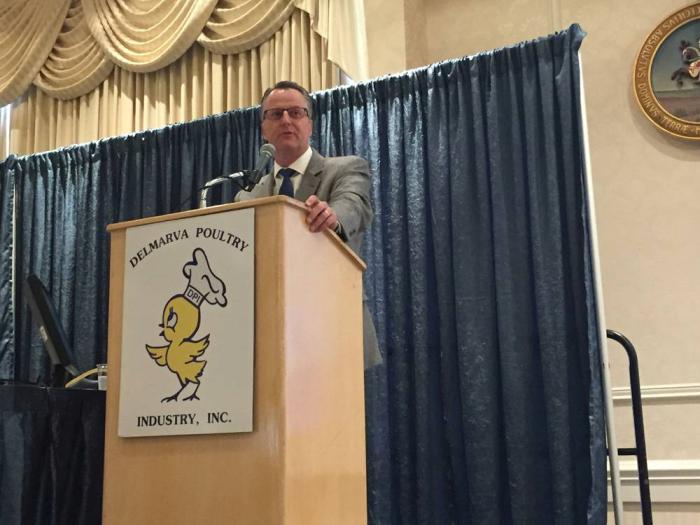
Charlie Arnot
Poultry companies have to understand that they must address this “should” question by engaging consumers. If not, efforts to educate the public will be unsuccessful.
“Consumers want information from academics, but they don’t want academic information,” he said.
Instead of falling back on science, Arnot advised the poultry industry to shift its focus to asking how it can be a resource for consumers seeking safe, quality products. For example, the use of antibiotics in poultry production is seen by many consumers as contributing to resistance in humans; instead, companies need to engage with consumers in a way that communicates that antibiotics help to keep healthy food affordable for them, which is a top concern according to Arnot.
To increase transparency and gain consumer trust, Arnot offered three key takeaways:
1. Begin public engagement using shared values
2. Find ways to open the digital door to today’s poultry industry
3. Commit to engaging early, often and consistently
The Delmarva Poultry Industry 2015 National Meeting on Poultry Health, Processing and Live Production was held October 13-14 in Ocean City, Maryland.
The advent of digital and social media has consumer pressure and activism largely influencing views on animal agriculture as people crowdsource information from family, friends and other non-experts, making it critical for the poultry industry to identify the groups and people with whom they need to engage. Arnot suggested that female veterinarians, ideally also mothers, are the industry’s most effective channel for conveying its message.
But, facts are not what those consumers want in this messaging – they want to know that poultry companies share their values in seeking safe food for their families. In fact, according to Arnot, shared values are three to five times more important to building consumer trust than sharing facts. Consumers want to know poultry companies are ethically grounded, so companies must find more effective ways to demonstrate compassion, responsibility, fairness and truth.
“Our historical response has been science says we can, but society will tell us if we should,” Arnot said.
Charlie Arnot
Poultry companies have to understand that they must address this “should” question by engaging consumers. If not, efforts to educate the public will be unsuccessful.
“Consumers want information from academics, but they don’t want academic information,” he said.
Instead of falling back on science, Arnot advised the poultry industry to shift its focus to asking how it can be a resource for consumers seeking safe, quality products. For example, the use of antibiotics in poultry production is seen by many consumers as contributing to resistance in humans; instead, companies need to engage with consumers in a way that communicates that antibiotics help to keep healthy food affordable for them, which is a top concern according to Arnot.
To increase transparency and gain consumer trust, Arnot offered three key takeaways:
1. Begin public engagement using shared values
2. Find ways to open the digital door to today’s poultry industry
3. Commit to engaging early, often and consistently
The Delmarva Poultry Industry 2015 National Meeting on Poultry Health, Processing and Live Production was held October 13-14 in Ocean City, Maryland.
40 separate introductions of avian flu
The epidemiologic surveys conducted by USDA APHIS, coupled with the genetic analysis of the viral isolates collected at the affected farms, have yielded information about how the avian flu was likely introduced onto individual U.S. farms last spring.
Dr. David Halvorson, professor emeritus, department of veterinary and biomedical sciences, University of Minnesota, said that the relatedness of the viral isolates coupled with the timeline of the outbreak provide evidence that there were approximately 40 primary introductions of the virus from the wild bird reservoir. He told the audience at USPOULTRY’s Live Production & Welfare Seminar that probably as many as 25 of these introductions were controlled, but the other 15 introductions weren’t controlled immediately and led to secondary spread -- lateral movement from farm to farm.
Avian flu viral load
Halvorson, who has worked in Minnesota for decades, said that, even though the Minnesota poultry industry has lots of experience with low path avian influenza, it wasn’t prepared for this highly pathogenic strain of avian flu. He said that an individual waterfowl can excrete 10 billion viruses of this flu strain, which doesn’t make the duck or goose sick, every day. So, 1 million waterfowl, what Halvorson called a realistic number for the “Land of 10,000 Lakes,” could excrete 10 quadrillion viruses per day into the environment.
Snow geese and Canada geese may have spread the virus in North America, according to Halvorson. Both species are migratory, but they also have winter resident populations in Minnesota. Migratory individuals in this species could have picked up virus from birds on the west coast and brought it to the Midwest, where resident populations of these species became carriers. This scenario would explain the presence of the virus in Minnesota in March when the outbreak started.
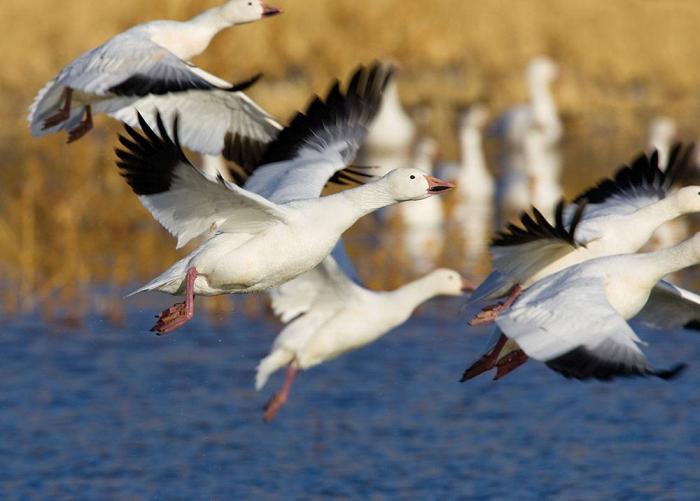
Kenneth Canning/istockphoto | Snow geese are one of the species of waterfowl that could have carried the avian influenza virus from the arctic to the Midwestern U.S.
Avian influenza virus survives indefinitely at freezing temperatures. Halvorson suggested that “freeze-dried” virus in large quantities contaminating the environment is what led to the large number of introductions of the virus from wild bird populations to domestic poultry.
Avian flu virus overwhelms resources
“We failed to understand the potential scope of the outbreak,” Halvorson said. “No one planned for 40 introductions, and that left us short on people and resources. All of the planning was based on getting an introduction, then establishing a control zone and stamping it out.”
At the peak of the outbreak on April 24, 2015, Minnesota had 57 control areas 10 kilometers in diameter each. This put more than 6,000 square miles in control zones -- an area bigger than the entire state of Connecticut and just less than New Jersey. He said that, at that point, it is impossible to do everything right because there are not enough people and other resources.
“The virus was too thick and the control effort was too thin,” he said. The longer it took to depopulate a farm, then the more virus that was shed. Crews of hundreds of people used to depopulate farms had to leave the farm every day, creating the opportunity to carry virus off the farm.
“How are you going to control their contamination level?” Halvorson asked. “The answer is, you can’t.”
He called the situations where crews of inexperienced people were brought onto large farms to accomplish depopulation as quickly as possible a “catastrophe” because you had that many people coming onto and off the infected farm every day and these people had to go back home or to hotels and restaurants each evening, possibly spreading the virus. This has led to the consideration of ventilation shut down as a means of rapid depopulation.
Industry responsible for avian flu control
“When you have a disease outbreak like this, it is the industry that has allowed it to happen,” Halvorson said. “The industry is the only group that can control it. I think we all get the mistaken idea that the government is going to control the disease, that APHIS is going to come in and control the disease. No, that isn’t what they are going to do. They are going to come in and assist you with killing the flock and assist you with your cleaning and disinfection procedures, but they are not going to control the disease. They don’t have the manpower, the wherewithal, the knowledge or the skills to do that.”
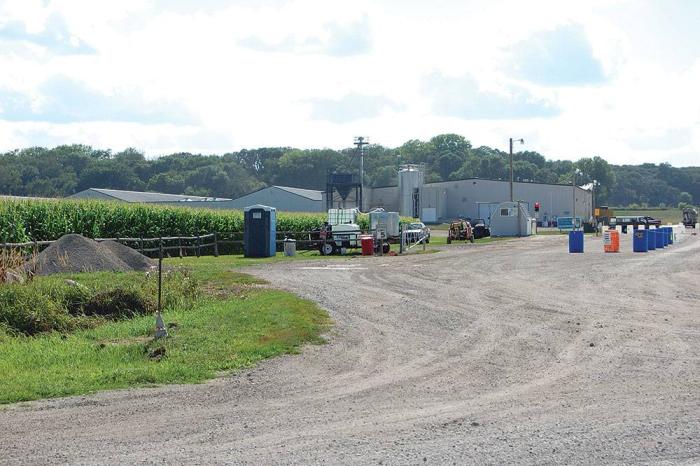
Terrence O'Keefe | A high-pressure sprayer at the entrance to this Iowa layer farm provides an example of the improvised biosecurity measures implemented as a result of the avian flu outbreak.
As the outbreak progressed, the virus became better adapted to poultry.
“At the beginning of the outbreak, you had a virus that wasn’t so good at infecting chickens, but by April, the virus was very good at infecting chickens,” Halvorson said.
Avian flu spreading from farm to farm
The 40 introductions of the avian flu virus from the wild onto poultry farms has been confirmed by molecular analysis of the virus isolates, and this analysis has also been used to show the lateral spread from these introductions. Minnesota, North and South Dakota, Wisconsin, Missouri and Arkansas had around 35 introductions from the wild, or index cases, and lateral spread to around 90 more premises. On average, each index case in these states subsequently led to around 2.5 more farms becoming infected with the virus.
In contrast, Iowa appears to have only had two introductions from wild birds, and these each resulted in about 37 other farms becoming infected with the avian flu virus. Halvorson said that one factor that likely contributed to the rapid spread of the virus from farm to farm was the fact that birds could be infected and shed virus in large quantities for five to 10 days prior to mortality increasing.
“So your daily biosecurity has to be pretty good or else you can be inadvertently spreading the virus, and we certainly did that,” he said.
Greatest threat is outside your barn door
Halvorson said biosecurity practices that had worked in the past, which were good enough for Mycoplasma gallisepticum, laryngotracheitis, and low path avian flu, were not enough to protect poultry farms from wild bird introductions of highly pathogenic avian flu. The approximately 40 introductions of avian flu from wild birds was unprecedented. He said that, in most states -- with the exception of Iowa -- biosecurity worked “pretty well” to prevent lateral spread.
The epidemiologic surveys filled out comparing farms that got avian influenza from control farms that didn’t get the disease suggests some associations between certain farm practices and increased risk of getting the disease. But, every farm is different and site-specific biosecurity plans are recommended based on that farm’s circumstances.
There is a consensus on what biosecurity programs for poultry farms need to incorporate, according to Halvorson. He said that each farm’s biosecurity plan needs for someone to be in charge, preferably a veterinarian. There needs to be training for all employees. The biosecurity plan has to incorporate the line of separation; peripheral buffer area; control movement of personnel and equipment, live birds, dead birds, manure and eggs; exclude wild birds from structures on the farm; and be reviewed with an eye toward continuous improvement.
The H5 highly pathogenic avian flu virus that has come to North America from Asia is probably here to stay for at least a few years, according to Halvorson, because the virus has persisted in Asia for 19 years. U.S. poultry producers have to assume that the virus might be just outside the barn door.
Dr. David Halvorson, professor emeritus, department of veterinary and biomedical sciences, University of Minnesota, said that the relatedness of the viral isolates coupled with the timeline of the outbreak provide evidence that there were approximately 40 primary introductions of the virus from the wild bird reservoir. He told the audience at USPOULTRY’s Live Production & Welfare Seminar that probably as many as 25 of these introductions were controlled, but the other 15 introductions weren’t controlled immediately and led to secondary spread -- lateral movement from farm to farm.
Avian flu viral load
Halvorson, who has worked in Minnesota for decades, said that, even though the Minnesota poultry industry has lots of experience with low path avian influenza, it wasn’t prepared for this highly pathogenic strain of avian flu. He said that an individual waterfowl can excrete 10 billion viruses of this flu strain, which doesn’t make the duck or goose sick, every day. So, 1 million waterfowl, what Halvorson called a realistic number for the “Land of 10,000 Lakes,” could excrete 10 quadrillion viruses per day into the environment.
Snow geese and Canada geese may have spread the virus in North America, according to Halvorson. Both species are migratory, but they also have winter resident populations in Minnesota. Migratory individuals in this species could have picked up virus from birds on the west coast and brought it to the Midwest, where resident populations of these species became carriers. This scenario would explain the presence of the virus in Minnesota in March when the outbreak started.
Kenneth Canning/istockphoto | Snow geese are one of the species of waterfowl that could have carried the avian influenza virus from the arctic to the Midwestern U.S.
Avian influenza virus survives indefinitely at freezing temperatures. Halvorson suggested that “freeze-dried” virus in large quantities contaminating the environment is what led to the large number of introductions of the virus from wild bird populations to domestic poultry.
Avian flu virus overwhelms resources
“We failed to understand the potential scope of the outbreak,” Halvorson said. “No one planned for 40 introductions, and that left us short on people and resources. All of the planning was based on getting an introduction, then establishing a control zone and stamping it out.”
At the peak of the outbreak on April 24, 2015, Minnesota had 57 control areas 10 kilometers in diameter each. This put more than 6,000 square miles in control zones -- an area bigger than the entire state of Connecticut and just less than New Jersey. He said that, at that point, it is impossible to do everything right because there are not enough people and other resources.
“The virus was too thick and the control effort was too thin,” he said. The longer it took to depopulate a farm, then the more virus that was shed. Crews of hundreds of people used to depopulate farms had to leave the farm every day, creating the opportunity to carry virus off the farm.
“How are you going to control their contamination level?” Halvorson asked. “The answer is, you can’t.”
He called the situations where crews of inexperienced people were brought onto large farms to accomplish depopulation as quickly as possible a “catastrophe” because you had that many people coming onto and off the infected farm every day and these people had to go back home or to hotels and restaurants each evening, possibly spreading the virus. This has led to the consideration of ventilation shut down as a means of rapid depopulation.
Industry responsible for avian flu control
“When you have a disease outbreak like this, it is the industry that has allowed it to happen,” Halvorson said. “The industry is the only group that can control it. I think we all get the mistaken idea that the government is going to control the disease, that APHIS is going to come in and control the disease. No, that isn’t what they are going to do. They are going to come in and assist you with killing the flock and assist you with your cleaning and disinfection procedures, but they are not going to control the disease. They don’t have the manpower, the wherewithal, the knowledge or the skills to do that.”
Terrence O'Keefe | A high-pressure sprayer at the entrance to this Iowa layer farm provides an example of the improvised biosecurity measures implemented as a result of the avian flu outbreak.
As the outbreak progressed, the virus became better adapted to poultry.
“At the beginning of the outbreak, you had a virus that wasn’t so good at infecting chickens, but by April, the virus was very good at infecting chickens,” Halvorson said.
Avian flu spreading from farm to farm
The 40 introductions of the avian flu virus from the wild onto poultry farms has been confirmed by molecular analysis of the virus isolates, and this analysis has also been used to show the lateral spread from these introductions. Minnesota, North and South Dakota, Wisconsin, Missouri and Arkansas had around 35 introductions from the wild, or index cases, and lateral spread to around 90 more premises. On average, each index case in these states subsequently led to around 2.5 more farms becoming infected with the virus.
In contrast, Iowa appears to have only had two introductions from wild birds, and these each resulted in about 37 other farms becoming infected with the avian flu virus. Halvorson said that one factor that likely contributed to the rapid spread of the virus from farm to farm was the fact that birds could be infected and shed virus in large quantities for five to 10 days prior to mortality increasing.
“So your daily biosecurity has to be pretty good or else you can be inadvertently spreading the virus, and we certainly did that,” he said.
Greatest threat is outside your barn door
Halvorson said biosecurity practices that had worked in the past, which were good enough for Mycoplasma gallisepticum, laryngotracheitis, and low path avian flu, were not enough to protect poultry farms from wild bird introductions of highly pathogenic avian flu. The approximately 40 introductions of avian flu from wild birds was unprecedented. He said that, in most states -- with the exception of Iowa -- biosecurity worked “pretty well” to prevent lateral spread.
The epidemiologic surveys filled out comparing farms that got avian influenza from control farms that didn’t get the disease suggests some associations between certain farm practices and increased risk of getting the disease. But, every farm is different and site-specific biosecurity plans are recommended based on that farm’s circumstances.
There is a consensus on what biosecurity programs for poultry farms need to incorporate, according to Halvorson. He said that each farm’s biosecurity plan needs for someone to be in charge, preferably a veterinarian. There needs to be training for all employees. The biosecurity plan has to incorporate the line of separation; peripheral buffer area; control movement of personnel and equipment, live birds, dead birds, manure and eggs; exclude wild birds from structures on the farm; and be reviewed with an eye toward continuous improvement.
The H5 highly pathogenic avian flu virus that has come to North America from Asia is probably here to stay for at least a few years, according to Halvorson, because the virus has persisted in Asia for 19 years. U.S. poultry producers have to assume that the virus might be just outside the barn door.
Friday, October 16, 2015
South Carolina floods cause problems for poultry farmers
The recent storms and subsequent flooding in South Carolina are hurting the state’s poultry industry, although state officials are still assessing the damage.
Harry Ott, executive director USDA’s South Carolina Farm Service Agency (FSA) said in a USDA Radio News interview that while the agency has not received specific reports on bird losses at South Carolina poultry farms, the rains have caused other problems for poultry producers.
“We had a lot of roads get washed out, we’ve had some reports of poultry operations getting out of feed because they couldn’t get trucks in to the operations,” said Ott. “Until we get into all of these areas and assess the damages, it’s pretty difficult to get a firm number on it.”
Witter said there was no known damage of any significance to the company’s contract grow-out farms. There was also no known damage to the company’s plant in West Columbia or its further processing plant in Hemingway.
The biggest problem for House of Raeford, Witter said, is also one concerning the conditions of the roads.
“The main problem in both locations is road conditions, which may make it difficult for some of our employees to get to work,” he said
He also estimates that most fall vegetables that were ready to be harvested have been lost.
That $300 million estimate could likely change once more reports of damage are received.
LPH is also asking farmers to check animals for injuries that may have been incurred as a result of prolonged exposure to flooded areas.
Harry Ott, executive director USDA’s South Carolina Farm Service Agency (FSA) said in a USDA Radio News interview that while the agency has not received specific reports on bird losses at South Carolina poultry farms, the rains have caused other problems for poultry producers.
“We had a lot of roads get washed out, we’ve had some reports of poultry operations getting out of feed because they couldn’t get trucks in to the operations,” said Ott. “Until we get into all of these areas and assess the damages, it’s pretty difficult to get a firm number on it.”
House of Raeford avoids damage to South Carolina plants
House of Raeford Farms, a North Carolina-based poultry company with operations also in South Carolina, appears to have been “pretty fortunate,” according to company spokesman Dave Witter.Witter said there was no known damage of any significance to the company’s contract grow-out farms. There was also no known damage to the company’s plant in West Columbia or its further processing plant in Hemingway.
The biggest problem for House of Raeford, Witter said, is also one concerning the conditions of the roads.
“The main problem in both locations is road conditions, which may make it difficult for some of our employees to get to work,” he said
South Carolina crop damage
Ott said he is confident the storms caused at least $300 million worth of damage to the row crops alone. About 70 percent of the state’s cotton and peanut crop have been lost, and about 50 percent of the state’s soybeans have been lost.He also estimates that most fall vegetables that were ready to be harvested have been lost.
That $300 million estimate could likely change once more reports of damage are received.
Farmers encouraged to report damage
Clemson Livestock Poultry Health (LPH), a state regulatory agency that protects animal health and investigates diseases, is asking livestock and poultry producers to document any property damage to appropriate parties, including local county Clemson Extension agents.LPH is also asking farmers to check animals for injuries that may have been incurred as a result of prolonged exposure to flooded areas.
Thursday, October 15, 2015
Emergency funding granted for avian influenza research
In response to a critical need in the industry, U.S. Poultry & Egg Association (USPOULTRY) has approved $550,000 in emergency funding to support further avian influenza research and communication. These projects are to be completed on a fast track over the next several months, and address some of the most critical questions and issues that arose from the highly pathogenic avian influenza (HPAI) outbreak this past spring.
“Our industry has been greatly impacted by the avian influenza virus, and a number of critical needs have been identified for research and communication outreach. USPOULTRY is investing significant funds to help address these priority needs,” said Sherman Miller, Cal-Maine Foods, Jackson, MS, and USPOULTRY chairman.
The following avian influenza projects have been approved for funding.
“Our industry has been greatly impacted by the avian influenza virus, and a number of critical needs have been identified for research and communication outreach. USPOULTRY is investing significant funds to help address these priority needs,” said Sherman Miller, Cal-Maine Foods, Jackson, MS, and USPOULTRY chairman.
The following avian influenza projects have been approved for funding.
- Formaldehyde Inactivation of Avian Influenza Virus in Poultry Feed, Auburn University
- Inactivation of Avian Influenza Virus in Poultry Litter, Southeast Poultry Research Laboratory, USDA-ARS
- Developing a HPAI Planning Tool for Poultry Farms, University of Minnesota
- Humane Depopulation of Poultry, Researcher to be determined
- Onsite Holding of Sexually Immature Turkey Hens during Periods of Mandatory Disease Quarantine, Michigan State University
- Rapid Disposal of Poultry Carcasses Following Depopulation, USPOULTRY Board Research Initiative pre-proposals are currently being sought on this research topic with pre-proposals due Nov. 6.
- “ALL IN OR ALL GONE” - HPAI Biosecurity Outreach Program, Funding is provided to help expand the biosecurity outreach program developed by the Georgia Poultry Federation to other states.
Ceva, Harrisvaccines get USDA avian flu vaccine contracts
The USDA’s Animal and Plant Health Inspection Service (APHIS) on October 13 awarded contracts to Harrisvaccines and Ceva to manufacture doses of avian influenza vaccine. This action is being taken to develop the agency’s National Veterinary Stockpile, and does not signal a decision to vaccinate for highly pathogenic avian influenza (HPAI).
While APHIS has not approved the use of vaccine to respond to HPAI, the agency is preparing to ensure that vaccine is available should the decision be made to use it during a future outbreak. Any decision to use vaccination in a future HPAI outbreak would require careful consideration of the efficacy of the vaccine, any impacts of using HPAI vaccine in the field, and the potential trade impacts.
Earlier in the year, APHIS issued a request for proposals (RFP) for vaccine manufacturers with the interest and capability to supply a variety of Eurasian (EA) H5 vaccines in sufficient numbers to establish the emergency stockpile. As part of the award, companies must:
“The Harrisvaccines team is honored to assist the USDA in the continued fight against avian influenza,” said Dr. Hank Harris, founder and CEO of Harrisvaccines. “By stockpiling our pioneering RNA particle vaccine, the U.S. is taking an important first step in protecting our poultry and egg producers against another overwhelming loss. Harrisvaccines is proud to be a part of that effort.”
The USDA has requested that Harrisvaccines provide a total of 48 million doses, 25 million of which will be provided within 45 days, the company stated.
Ceva, in a press release, stated it had studied the evolution of the avian influenza virus and the increasing difficulty countries and regions have had in containing its spread. Ceva's avian influenza vaccines are used in other geographical areas throughout the world.
"We hope the U.S. poultry producers do not have to suffer through a avian influenza outbreak this fall or during 2016," said Dr. Kristi Moore Dorsey, Ceva vice president of research and development. "As part of the USDA vaccine stockpile, vaccine will be available for use by USDA if they decide to mandate vaccination."
While APHIS has not approved the use of vaccine to respond to HPAI, the agency is preparing to ensure that vaccine is available should the decision be made to use it during a future outbreak. Any decision to use vaccination in a future HPAI outbreak would require careful consideration of the efficacy of the vaccine, any impacts of using HPAI vaccine in the field, and the potential trade impacts.
Earlier in the year, APHIS issued a request for proposals (RFP) for vaccine manufacturers with the interest and capability to supply a variety of Eurasian (EA) H5 vaccines in sufficient numbers to establish the emergency stockpile. As part of the award, companies must:
- Manufacture the number of vaccine doses outlined in their contract, and store those doses up to 5 years
- Deliver the finished vaccine anywhere in the country within 10 days of a request for doses from the National Veterinary Stockpile
- Test the vaccine regularly to ensure continued potency
- Provide information and testing results with APHIS upon request
Companies respond to earning contracts with APHIS
The Harrisvaccines product is the RNA particle vaccine, while Ceva's product is called Vectormune AI.“The Harrisvaccines team is honored to assist the USDA in the continued fight against avian influenza,” said Dr. Hank Harris, founder and CEO of Harrisvaccines. “By stockpiling our pioneering RNA particle vaccine, the U.S. is taking an important first step in protecting our poultry and egg producers against another overwhelming loss. Harrisvaccines is proud to be a part of that effort.”
The USDA has requested that Harrisvaccines provide a total of 48 million doses, 25 million of which will be provided within 45 days, the company stated.
Ceva, in a press release, stated it had studied the evolution of the avian influenza virus and the increasing difficulty countries and regions have had in containing its spread. Ceva's avian influenza vaccines are used in other geographical areas throughout the world.
"We hope the U.S. poultry producers do not have to suffer through a avian influenza outbreak this fall or during 2016," said Dr. Kristi Moore Dorsey, Ceva vice president of research and development. "As part of the USDA vaccine stockpile, vaccine will be available for use by USDA if they decide to mandate vaccination."
APHIS continues to issue RFPs for avian flu vaccines
Although no decision has been made to use vaccine in the event of a future HPAI outbreak, APHIS will continue to issue RFPs for vaccine manufacturers on a quarterly basis through September 2016, to allow additional products to be developed and considered for the stockpile should an HPAI outbreak occur. Information about future RFPs and awards will be available on the APHIS website.Monday, October 12, 2015
Poultry news developments for the week ending October 8
The global poultry industry had a busy week with one acquisition finalized, another planned, and a planned expansion for another company. A recall, a lawsuit and further concerns about avian influenza also made the headlines.
Here are 10 of the top poultry news items and blogs from WATTAgNet for the week ending October 8:


Here are 10 of the top poultry news items and blogs from WATTAgNet for the week ending October 8:
US Labor Department accuses Pilgrim's of discrimination
The U.S. Department of Labor's Office of Federal Contract Compliance Programs (OFCCP) has filed a lawsuit against Pilgrim's, alleging the poultry company systematically discriminated against qualified African-American applicants seeking entry-level jobs as laborers and operatives at its plant in Marshville, North Carolina.
Aviagen completes expansion at Oklahoma hatchery
A $9.5 million expansion project at Aviagen's hatchery in Sallisaw, Oklahoma, has been completed.
Post Holdings completes Willamette Egg Farms acquisition
Post Holdings has completed its purchase of Willamette Egg Farms.
Salmonella worries prompt Koch Foods chicken recall
Aspen Foods, a division of Koch Foods, is recalling about 561,000 pounds of frozen, raw stuffed and breaded chicken products over Salmonella concerns.
Countries reach Trans-Pacific Partnership agreement
Negotiators from 12 countries reached an agreement on October 5 on the Trans-Pacific Partnership (TPP), resulting in a trade pact that vows to cut trade barriers as well as set labor and environmental standards.
Long run of US broiler profits to end in 2016
Gary Thornton: U.S. broiler margins have been profitable for all but three quarters over the last four years, but they are projected to turn to losses beginning in the fourth quarter of 2015 and through 2016.
Activists say alternative animal agriculture is bad
Terrence O'Keefe: I've never liked the term 'factory farm' and, according to comments made by speakers at the 2015 Animal Rights National Conference, in Alexandria, Virginia, some animal rights activists have soured on the term as well.
BRF plans aquisition to grow presence in Argentina
Brazilian meat, poultry and food company BRF has plans to expand its presence in Argentina with the proposed acquisition of the Vienissima, GoodMark, Manty, Delicia, Hamond, Tres Cruces and Wilson brands.
Avian flu cases continue in Taiwan, Vietnam and Nigeria
The World Organisation for Animal Health (OIE) has received reports about a number of new outbreaks of highly pathogenic avian influenza in Taiwan, Vietnam and Nigeria over the last two weeks.
HKSCan to build new poultry facility in western Finland
Nordic meat and poultry company HKScan is investing EUR80 million in a new poultry production facility in the western Finland city of Rauma.
Tuesday, October 6, 2015
Industry confidence remains high despite avian influenza
U.S. poultry industry confidence was dampened in the second quarter of 2015 – but remained high – despite the hardships from the avian influenza (AI) situation. Perceptions of future conditions and opportunities were most harmed but remained bullish regarding the profit outlook.
Since the second quarter, optimism has climbed slightly while the previously-positive profit outlook took a downward turn.
The Overall Index for third-quarter 2015 now stands at 124.3, up from 120.0 during second-quarter 2015 (100-point baseline = 1996). The Present Situation Index increased from 152.6 to 165.2 since the second quarter, while the Expectations Index improved to 97.0 for the third quarter from 93.3 the previous quarter.
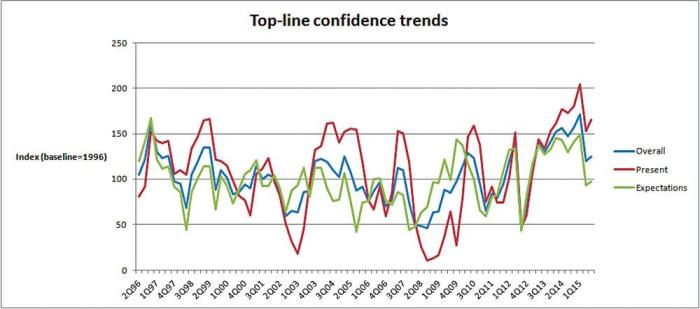
Rennier Associates | Overall confidence in the poultry industry remained high into the third quarter of 2015 in spite of avian influenza concerns.
Talk of expansion drove a whopping 47 percent increase in the Future Opportunities sub-index, moving from 92.6 in the second quarter of 2015 to a current value of 136.3. Several respondents cited new complexes coming online as well as the industry generally "rebuilding their base business as the market is ripe for expansion."
Expansion was linked to more jobs and a necessary rebuilding of flocks, supported by recent monthly increases of 5 percent to 7 percent in ready-to-cook meat (due to both increases in placements and average weights).
However, this increase in available poultry protein produced concerns about future profits. The Future Profits sub-index fell from 118.6 to a below-normal 82.8 for third-quarter 2015. Some analysts have disputed this claim citing a relatively high retail demand for broilers and a recovering export market.
In addition, several respondents felt profits would also be squeezed by increased pork supplies following a recovery from PED virus crisis and sharp cost increases for insurance, gas and electricity.
These findings parallel the Consumer Confidence Index, which has recently rebounded to become "more upbeat." Consumers are once again feeling optimistic about the near future, especially the labor market. Income expectations, however, were little improved.
In summary, avian Influenza continues to color the thinking of many in the industry, although optimism remains well above normative levels. Many foresee more opportunities, although concerns about profitability were driven by increased supply, greater competition from the swine sector and rising costs. Most analysts, however, predict that the market can absorb these factors and will remain stable into 2016. Let’s hope they’re right.
Since the second quarter, optimism has climbed slightly while the previously-positive profit outlook took a downward turn.
The Overall Index for third-quarter 2015 now stands at 124.3, up from 120.0 during second-quarter 2015 (100-point baseline = 1996). The Present Situation Index increased from 152.6 to 165.2 since the second quarter, while the Expectations Index improved to 97.0 for the third quarter from 93.3 the previous quarter.
Rennier Associates | Overall confidence in the poultry industry remained high into the third quarter of 2015 in spite of avian influenza concerns.
Talk of expansion drove a whopping 47 percent increase in the Future Opportunities sub-index, moving from 92.6 in the second quarter of 2015 to a current value of 136.3. Several respondents cited new complexes coming online as well as the industry generally "rebuilding their base business as the market is ripe for expansion."
Expansion was linked to more jobs and a necessary rebuilding of flocks, supported by recent monthly increases of 5 percent to 7 percent in ready-to-cook meat (due to both increases in placements and average weights).
However, this increase in available poultry protein produced concerns about future profits. The Future Profits sub-index fell from 118.6 to a below-normal 82.8 for third-quarter 2015. Some analysts have disputed this claim citing a relatively high retail demand for broilers and a recovering export market.
In addition, several respondents felt profits would also be squeezed by increased pork supplies following a recovery from PED virus crisis and sharp cost increases for insurance, gas and electricity.
These findings parallel the Consumer Confidence Index, which has recently rebounded to become "more upbeat." Consumers are once again feeling optimistic about the near future, especially the labor market. Income expectations, however, were little improved.
In summary, avian Influenza continues to color the thinking of many in the industry, although optimism remains well above normative levels. Many foresee more opportunities, although concerns about profitability were driven by increased supply, greater competition from the swine sector and rising costs. Most analysts, however, predict that the market can absorb these factors and will remain stable into 2016. Let’s hope they’re right.
Monday, October 5, 2015
6 avian flu updates for the week ending October 2
The poultry industry remains concerned about the impact avian influenza has had so far in 2015. Here are six news developments concerning the virus that you should know:
1. 2015 U.S. turkey numbers expected to drop 4 percent – In its Turkeys Raised Report, the USDA projected that the number of turkeys grown in the U.S. will drop to 228 million in 2015, a four percent drop from the number raised in 2014.
2. Cal-Maine income soars – Cal-Maine Foods, the largest egg producer in the United States, has not had any flocks affected by avian influenza in 2015, and staying free of the virus has helped its bottom line. As avian influenza infections have hit other egg companies’ flocks and created an egg shortage, Cal-Maine has been able to profit from higher egg prices. The company saw its quarterly net income rise from $27.7 million to $143 million.
3. Groups urge FDA to change rule – As the U.S. deals with an egg shortage brought on by avian influenza, the National Chicken Council and two other organizations are urging the U.S. Food and Drug Administration to change a rule that forces broiler breeders to discard acceptable and safe shell eggs.
4. Georgia Poultry Federation launches avian flu campaign -- The Georgia Poultry Federation has initiated a targeted campaign educating poultry farmers about this fall’s impending risks of avian influenza and the biosecurity measures that can be used to prevent it.
5. Avian flu affects Turkish poultry exports – Avian influenza is being largely blamed for a 50 percent drop in poultry exports from Turkey.
6. Minnesota testing wild ducks for avian flu – The Minnesota Department of Natural Resources is offering voluntary testing of wild ducks for avian influenza. Hunters are being asked to take their birds to be sampled, but since there are no food safety concerns, the hunters can take the birds home after a swab sample is taken from each bird.
1. 2015 U.S. turkey numbers expected to drop 4 percent – In its Turkeys Raised Report, the USDA projected that the number of turkeys grown in the U.S. will drop to 228 million in 2015, a four percent drop from the number raised in 2014.
2. Cal-Maine income soars – Cal-Maine Foods, the largest egg producer in the United States, has not had any flocks affected by avian influenza in 2015, and staying free of the virus has helped its bottom line. As avian influenza infections have hit other egg companies’ flocks and created an egg shortage, Cal-Maine has been able to profit from higher egg prices. The company saw its quarterly net income rise from $27.7 million to $143 million.
3. Groups urge FDA to change rule – As the U.S. deals with an egg shortage brought on by avian influenza, the National Chicken Council and two other organizations are urging the U.S. Food and Drug Administration to change a rule that forces broiler breeders to discard acceptable and safe shell eggs.
4. Georgia Poultry Federation launches avian flu campaign -- The Georgia Poultry Federation has initiated a targeted campaign educating poultry farmers about this fall’s impending risks of avian influenza and the biosecurity measures that can be used to prevent it.
5. Avian flu affects Turkish poultry exports – Avian influenza is being largely blamed for a 50 percent drop in poultry exports from Turkey.
6. Minnesota testing wild ducks for avian flu – The Minnesota Department of Natural Resources is offering voluntary testing of wild ducks for avian influenza. Hunters are being asked to take their birds to be sampled, but since there are no food safety concerns, the hunters can take the birds home after a swab sample is taken from each bird.
Friday, October 2, 2015
Campaign launched to warn, educate farmers about Avian Influenza
The Georgia Poultry Federation has initiated a targeted campaign educating poultry farmers about this fall’s impending risks of avian influenza (AI) and the biosecurity measures that can be used to prevent it. To date, the AI campaign has been embraced statewide by Georgia’s poultry companies and growers.
“What we’re doing is not scare tactics,” says Mike Giles, president of the Georgia Poultry Federation. “There is a very real risk of poultry farms being infected as wild birds begin their migratory flights down south with colder weather.”
Giles added that the risk of AI “is real – and potentially could be devastating to our North Georgia region and the entire state economy.”
Working with the Gainesville-based marketing agency Morton Vardeman & Carlson, the Georgia Poultry Federation has developed a themed campaign encouraging poultry growers to be “all in” with biosecurity measures to avoid losing their entire flocks to avian influenza.
The campaign theme “All In or All Gone” is being promoted via a myriad of marketing strategies that includes an education website (ALLinALLgone.com), periodic email messages sent directly to the farmers, and various promotional signs displayed at farms and on vehicles.
“We have had tremendous cooperation from poultry companies throughout the state,” said Giles. “With their support, we have gathered the e-mail addresses for poultry farmers in Georgia as part of this education campaign. That has been a huge boost to the campaign.”
The messages are also being delivered to poultry growers at biosecurity training meetings held throughout the state.
The e-mail campaign is planned around a series of messages educating farmers about simple biosecurity measures such as stepping into a disinfectant pan every time a poultry house is entered. The e-mails include Spanish and Vietnamese translations to ensure that the messages are understood by all workers on the farms.
The AI disease knows no borders, Giles said, so the Federation has agreed to share the campaign with other poultry and turkey associations across the country that have expressed an interest in joining the campaign.
The current strain of AI only affects birds, not humans. The source of the virus is typically wild birds such as ducks and geese. Once the virus infects a single chicken or turkey, the disease can spread rapidly and wipe out an entire flock.
The Georgia Poultry Laboratory Network, based in Gainesville, regularly monitors Georgia’s poultry flocks for AI. A statewide response plan is in place if AI were to infect one or more poultry houses. Parts of the plan include establishment of a six-mile control zone around the infected farm.
“We are doing everything possible to be prepared to respond to AI in Georgia,” Giles said. “The industry is working closely with our state and federal partners to make sure that we are ready for something that we hope never happens.”
Giles stressed that an AI outbreak can still be avoided if every Georgia poultry farmer follows the biosecurity measures outlined in the All In education campaign. “That’s why we say it’s critical that we’re all in.”
“What we’re doing is not scare tactics,” says Mike Giles, president of the Georgia Poultry Federation. “There is a very real risk of poultry farms being infected as wild birds begin their migratory flights down south with colder weather.”
Giles added that the risk of AI “is real – and potentially could be devastating to our North Georgia region and the entire state economy.”
Working with the Gainesville-based marketing agency Morton Vardeman & Carlson, the Georgia Poultry Federation has developed a themed campaign encouraging poultry growers to be “all in” with biosecurity measures to avoid losing their entire flocks to avian influenza.
The campaign theme “All In or All Gone” is being promoted via a myriad of marketing strategies that includes an education website (ALLinALLgone.com), periodic email messages sent directly to the farmers, and various promotional signs displayed at farms and on vehicles.
“We have had tremendous cooperation from poultry companies throughout the state,” said Giles. “With their support, we have gathered the e-mail addresses for poultry farmers in Georgia as part of this education campaign. That has been a huge boost to the campaign.”
The messages are also being delivered to poultry growers at biosecurity training meetings held throughout the state.
The e-mail campaign is planned around a series of messages educating farmers about simple biosecurity measures such as stepping into a disinfectant pan every time a poultry house is entered. The e-mails include Spanish and Vietnamese translations to ensure that the messages are understood by all workers on the farms.
The AI disease knows no borders, Giles said, so the Federation has agreed to share the campaign with other poultry and turkey associations across the country that have expressed an interest in joining the campaign.
The current strain of AI only affects birds, not humans. The source of the virus is typically wild birds such as ducks and geese. Once the virus infects a single chicken or turkey, the disease can spread rapidly and wipe out an entire flock.
The Georgia Poultry Laboratory Network, based in Gainesville, regularly monitors Georgia’s poultry flocks for AI. A statewide response plan is in place if AI were to infect one or more poultry houses. Parts of the plan include establishment of a six-mile control zone around the infected farm.
“We are doing everything possible to be prepared to respond to AI in Georgia,” Giles said. “The industry is working closely with our state and federal partners to make sure that we are ready for something that we hope never happens.”
Giles stressed that an AI outbreak can still be avoided if every Georgia poultry farmer follows the biosecurity measures outlined in the All In education campaign. “That’s why we say it’s critical that we’re all in.”
Subscribe to:
Posts (Atom)
