Showing posts with label Bird Flu. Show all posts

Friday, January 1, 2016

Poultry vaccines can stop the spread of avian flu

Dr. Leslie David Sims, a consultant for Asia Pacific Veterinary Information Service, Australia, said research collected since the first outbreaks of highly pathogenic avian influenza (HPAI) in the 1990s demonstrates successful application of vaccination can be effective in controlling and stopping the spread of HPAI.
During the Watt Global Media webinar, Vaccination as Part of an Avian Flu Eradication Plan, Sims presented information on how the use of vaccination has controlled and eliminated avian influenza viruses in nations other than the U.S. in the past.
Sims, who’s worked as a consultant for the Food and Agriculture Organization of the United Nations and the World Bank, has advised veterinary authorities in China, Thailand, Cambodia, North Korea, Mongolia, Indonesia and Vietnam. His presentation centered on lessons learned in almost two decades of fighting and studying the so-called “goose Quandong” strain of the HPAI virus in Southeast Asia.
Stamping out, culling of infected and susceptible flocks, has long been viewed as the only way to control the spread of HPAI. Sims said that’s not exactly true.
While this approach to stamping out does work if new cases are detected early and the response is rapid, it comes at a high cost. During the 2014-2015 HPAI outbreak in the U.S., he estimated 49 million birds were killed or culled. Sims said stamping out also depends on the density of poultry being low and is ineffective if the cull happens after the virus has already been transmitted to other flocks.
Vaccination, when used in combination with other biosecurity measures, can be just as effective in stopping the spread and eliminating the spread of HPAI. Sims noted that vaccination – without preemptive culling – was successful in stopping the spread of HPAI in Hong Kong in 2002. In 2003, vaccination, in combination with quarantine and depopulation of affected houses, was successful in stopping an outbreak that had already begun. More recently, Sims said, vaccination has been used successfully in Italy and with low pathogenic avian influenza in the U.S.
Vaccination works best when the vaccine’s antigen closely matches the genetic makeup of the pathogen, Sims said. An early response to an outbreak, as well as bio-secure administration by competent veterinary services is necessary to the success of an immunization program, too. Cooperation among government agencies and poultry industries and close monitoring of flocks are also needed.
“It’s great to have the vaccine and, hopefully, you won’t have to use it,” Sims said.
While empirical evidence demonstrates vaccination is successful, there is significant skepticism about the practice in the poultry industry. Sims said that likely comes from the inability to eliminate HPAI with vaccination in regions where it is endemic, concerns about the process of vaccination rather than the vaccine itself, concerns vaccines will be ineffective against new strains of HPAI, mistaken beliefs that only mass depopulation works and international trade concerns raised by wide-spread vaccination to prevent the spread of HPAI. Some countries, he said, will stop imports because of vaccination. However, China – where vaccination has been used for more than a decade – is still exporting poultry to Japan.
“They do this from areas where vaccine is not being used, but it shows it is possible for some countries to accept products from countries where vaccine is being used even though the product which is being exported is not subject to vaccination in those cases,” Sims said.

Thursday, December 31, 2015

Ohio lifts bird exhibition ban

With no confirmed cases in Ohio and no immediate threat of a Highly Pathogenic Avian Influenza outbreak, Ohio Agriculture Director David T. Daniels and State Veterinarian Dr. Tony Forshey have rescinded the order prohibiting bird shows in Ohio. Officials urge poultry and bird owners, however, to remain vigilant and cautious in order to protect the health of their flocks during migration seasons. 
The order, issued on June 2, was originally intended to remain in place until April 2016. The ban included county and independent fairs, the Ohio State Fair, and all other gatherings of birds for show or for sale, including auctions and swap meets. Throughout the nationwide outbreak, the department worked closely with Ohio’s poultry producers and the USDA’s Animal and Plant Health Inspection Service to provide training and to closely monitor the health of poultry in the state.  
“Ohio is home to more than 50 million domestic birds, which makes our state particularly vulnerable to an outbreak. Thankfully, the disease never took hold here. I believe this is a justification of the steps taken by our producers and exhibitors to mitigate the risk of an outbreak,” said Director Daniels.  
The USDA first confirmed the avian flu virus in the U.S. beginning in late 2014.  While there were no confirmed cases of the disease in Ohio, throughout the spring and summer of 2015 more than 48 million birds nationally were affected. On Nov. 18, the OIE issued its final report on the deadly avian flu which declared that the outbreaks in all affected states are now final, closed and resolved. This now makes the U.S. free of avian influenza for the time being. 
One of the ways avian influenza spreads is by direct contact with contaminated materials coming from other infected birds. Exhibitions, auctions and swap meets where birds are co‐mingling pose a high risk of unintentionally spreading disease. While the intention is to allow bird exhibitions to be held next year, an outbreak in Ohio or nearby states may require the reinstatement or even an extension of the ban.
“I would like to extend a sincere thank you to OSU Extension and the youth exhibitors for their understanding and to their advisors for turning this unfortunate outbreak into an important educational moment. As I travelled around the state this summer, I was overwhelmed with the maturity and understanding of the disappointed but supportive young people I spoke with who were unable to bring their poultry projects to the fair. It’s a real testament to the strength and importance our 4H and FFA programs in Ohio,” said Director Daniels.

Tuesday, December 29, 2015

APHIS discusses criteria for potential HPAI vaccinations

The U.S. Department of Agriculture isn’t planning on widespread vaccination of poultry and layer flocks, but its considering how it might do so in the event of an outbreak of highly pathogenic avian influenza (HPAI).
During the Watt Global Media webinar, Vaccination as Part of an Avian Flu Eradication Plan, Dr. Lee Ann Thomas, director of the Avian, Swine & Aquatic Animal Health Center at the USDA’s Animal and Plant Health Inspection Service (APHIS), discussed what factors the agency would consider when making the decision of whether or not to approve use of the stockpiled avian influenza vaccines in the U.S.
Thomas said any decision to vaccinate will follow a science-based strategy focused on suppressing and eradicating the disease. With an established eradication plan and maintenance of enhanced biosecurity in mind, the agency would conduct a controlled vaccination of at-risk flocks, then monitor all vaccinated and at-risk birds before carrying out a repopulation plan.
Before making the decision to vaccinate, APHIS would consider the probability of containing the spread of the virus; the proximity of high-value genetic breeder birds to the outbreak; poultry density in the area that may be vaccinated; the possible increased risk of introduction of HPAI into uncontaminated flocks and the presence of HPAI transmitting waterfowl.
As for which birds would get vaccinated first, Thomas said APHIS would consider how effective a vaccine is in each species, which commodities would be impacted by an HPAI outbreak, how close farms are to one another, the outbreak pattern, and the type of flock.
Thomas stressed that no decision has been made to vaccinate birds in the U.S. The decision, she said, will ultimately lie with the agency’s administrator, Kevin Shea. If the decision is made, it would be supervised by incident command in the area, who would be charged with developing the plan for vaccination, reporting vaccine usage, permitting movements and monitoring all activities.
Logistically, Thomas said, immunizing millions of birds would be challenging. The efforts must be coordinated to ensure that national biosecurity is not compromised and that vaccination teams do not become unwitting transmitters of the virus. There would also need to be continuous monitoring of the immunized population to ensure there is no vaccine break.
The decision will not be made lightly, as widespread vaccination of the nation’s flocks could stymie foreign market’s appetite for U.S. poultry and eggs. Thomas said the December 2014 to June 2015 outbreak of HPAI led to the depopulation of 50 million birds and impacted the U.S.’s relationship with 17 trading partners, including China, Russia and South Korea.
While no decision has been made to immunize, USDA is already stockpiling millions of doses of vaccines that showed promise in preventing the spread the HPAI. Dr. David Suarez, the research leader for exotic and emerging avian viral disease research at the USDA’s Agricultural Research Service (ARS), said the U.S.’s options are limited because only licensed vaccines can be deployed by the USDA. In order to both incentivize the private sector to develop newer, more effective vaccines, and stock up for the event of a mass immunization, the USDA is building a stockpile of millions of doses of vaccine.
The two avian influenza vaccines purchased by USDA APHIS for the stockpile had different costs. The vaccines are being added to the stockpile at costs to USDA of $0.06 and $0.125 per dose by Ceva Animal Health and Harrisvaccines, respectively.
While there is some skepticism about the efficacy of vaccines in stopping HPAI outbreaks, Dr. Leslie David Sims, a consultant for Asia Pacific Veterinary Information Service, Australia, said empirical research gathered through decades of fighting HPAI outbreaks in Southeast Asia proves that vaccines, when properly administered, can be effective in halting the spread of the virus on specific farms and in wider geographic areas.

Avian flu spreads to new region of France

 According to the latest report from the agriculture ministry in France, dated December 18, avian influenza has been confirmed at 42 locations – 12 more than the previous report 2 days earlier. A sixth department (region) has been affected in the southwest of the country – Hautes Pyrénées – which borders Spain. Other regions affected are Landes (18 outbreaks), Dordogne (12), Gers (6), Pyrénées Atlantiques (4) and Haute Vienne (1).
The highly pathogenic avian influenza (HPAI) virus of an H5 subtype has been confirmed at most of the affected premises – generally prior to the birds being transported to the slaughterhouse - and the majority of birds affected so far have been ducks.
New cases in Landes were revealed at 4 locations when birds were tested prior to slaughter in the communities of Montaut, Saint Sever, Aubagnan and Eyres Moncube. In each case, samples taken tested positive for a highly pathogenic H5 form of the AI virus. In another outbreak in the region, both the H5N2 and H5N9 virus variants have been found in a domestic duck flock in Saint Cricq en Chalosse.
H5 HPAI has been detected in one new flock in Dordogne – at Lardin Saint Lazare, near a previous outbreak – prior to movement and slaughter.
The new cases in Gers, all also confirmed as H5 HPAI prior to transportation to the abattoir - are in ducks in Cazaubon, Eauze and Caupenne d'Armagnac.
Two duck flocks in Pyrénées Atlantiques tested positive in Maucor and Saint Jammes.
In Hautes Pyrénées, the HPAI virus was found at Labatut-Rivière during testing following an earlier outbreak nearby in Arroses.
Work is ongoing in each case to identify the variant(s) of the AI virus involved.

Update on global avian flu situation in humans

Official agencies in France are stressing that the HPAI in poultry flocks there poses no danger to human health through the consumption of poultry meat and other products.
The latest update from the World Health Organization (WHO) puts the total number of confirmed cases of influenza A (H5N1) since 2003 at 844, including 449 deaths.
Since the last update in November 2015, no new laboratory-confirmed human cases have been reported to WHO. So far in 2015, there have 143 cases, including 42 deaths, making it the worst year for this disease for the last 5 years. Worst-affected in 2015 was Egypt (136 cases, 39 deaths), with China (5 cases, 1 death) and Indonesia (2 cases, both died) also reporting outbreaks.
Commenting on the possible threat posed to human health of the latest outbreaks in French poultry, WHO states that, based on preliminary data, at least one of the viruses has different origins from the influenza A (H5) viruses that have caused human cases in the past. WHO says it is in contact with the animal health authorities to understand these viruses better and to assess the public health risk more accurately.
For avian influenza A (H7N9), WHO has received reports of two new confirmed human cases of infection in China, both of which reportedly had exposure to domestic poultry. This brings the total of confirmed cases of this virus in humans to 683, including at least 275 deaths. In 2015, the virus has been detected in the animal population in multiple provinces in China, indicating that the virus persists in the poultry population. If the pattern of human cases follows the trends seen in previous years, the number of human cases may rise over the coming months.
Since its previous update a month ago, WHO has been informed of 4 confirmed human cases of the avian influenza A (H9N2) virus infection in people in China. All of the cases were reported to have mild disease and none was hospitalized.
Friday, December 25, 2015

France confirms another 15 avian flu outbreaks

France has so far recorded a total of 30 outbreaks of avian influenza (AI), according to the country’s agriculture ministry – an increase of 15 new cases since a previous report just two days ago.
The same five regions (departments) in the south-west of the country west are affected: Dordogne (total of 11 outbreaks), Landes (13), Haute-Vienne (1), Gers (3) and Pyrénées Atlantiques (2).
Details of the latest outbreaks are understandably sketchy. In Dordogne, there were 2 new outbreaks in Campagnac-les-Querc and one in Saint Armand de Coly.
In Landes, the virus has been detected in three cases when birds were tested prior to slaughter in the districts of Saint Etienne d'Orthe, Bergouey and Monségur. There were also 6 outbreaks of highly pathogenic avian influenza (HPAI) in Momuy, Saint-Cricq-Chalosse, Montaut, Gaujacq, Serreslous-et-Arribans and Hauriet.
HPAI of the H5 variant has been detected at 2 new locations in the department of Gers: in ducks prior to slaughter in Panjas and in a flock of 2,000 guinea fowl and ducks in Mirande, which showed characteristic symptoms of the disease.
A second outbreak has occurred in Pyrénées Atlantiques, where a flock of 1,240 ducks has been affected.
Tests are on-going to determine the virus subtype and pathogenicity in each outbreak.
According to Thomson Reuters, a new subtype of the AI virus – H5N3 – has been detected at 3 locations in France (2 in Landes and 1 in Pyrénées Atlantiques) during enhanced surveillance. It is reportedly a low-pathogenic form. With the presence of H5N1, H5N2 and H5N9 already confirmed, the latest revelation would mean that 4 different subtypes of the AI virus are circulating in France at the present time.

Tuesday, December 22, 2015

New avian flu cases reported in France, Asia and Africa

In its latest report dated December 14, the French agriculture ministry puts the total number confirmed outbreaks of highly pathogenic avian influenza (HPAI) at 15 in five regions, all in the southwest of the country – Dordogne (8 cases), Landes (4) and one each in Haute Vienne, Le Gers and Pyrénées Atlantiques.
Outbreaks reported recently to the World Organisation for Animal Health (OIE) [include one outbreak caused by the H5N1 variant of the virus in Bosset in Dordogne at a farm with 1,070 ducks.
H5N1 was also confirmed at an HPAI outbreak in poultry recently at Les Billangues in Haute-Vienne.
ANSES, the French Agency for Food, Environmental and Occupational Health & Safety, has confirmed that the H5N1 virus detected in France is of European origin and not from Asia.  It also gives thetwo most likelyhypotheses on the originof the infection as a low-pathogenic form of the virus that has mutated into a highly pathogenic form, most likely in poultry or possibly within the wild bird population.
The H5N9 variant of HPAI has been detected recently at Arroses in Pyrénées Atlantiques in a flock of 500 ducks and in a mixed flock of 21,060 birds at Hosarrieu in the region of Landes. In the latter outbreak, the first signs were sudden mortality in the guinea fowl.
At other premises in Doazit (Landes) and Manciet (Le Gers), the highly pathogenic form of the H5N2 virus was detected. In the former outbreak, 1,700 ducks were tested prior to transportation to the abattoir following a previous outbreak nearby. Abnormal mortality had been observed among the 8,300 ducks at the farm in Manciet.
As a result of increased surveillance, the low-pathogenic form of the H5N2 virus has been detected in duck flocks at Castelnau Tursan and Sainte Colombe in Landes and at Castelnau de Mandailles in Aveyron.

Asia: HPAI outbreaks reported in Vietnam, Taiwan, South Korea and China

So far in December, Vietnam has reported three new outbreaks of HPAI. The H5N6 subtype of the virus affected a backyard flock of 705 mixed poultry in Quang Ninh province in the north-east of the country and 4,000 quails in Quang Nam in central Vietnam. In addition, what is described as a backyard flock of 42,000 birds were affected in Ba Ria-Vung Tau in the south of the country; the H5N1 variant of the virus was identified as the cause of that outbreak.
OIE has received a report from South Korea about 3 outbreaks of HPAI in mid-November caused by the H5N8 virus at neighbouring farms in South Jeolla province. More than 70,000 ducks were affected.
Taiwan has reported two outbreaks dating back to September of 2015 – one in Chiayi county and one in Tainan city – both affecting goose flocks and lading to the death or destruction of 3,000 birds. The H5N8 virus was confirmed there.
In November, abnormal mortalities were observed at two poultry farms in Pingtung County, and in two abattoirs in Pingtung and Hualien counties, Taiwan. Samples sent to the National Laboratory (AHRI) were confirmed positive for the H5N2 subtype HPAI virus. Three flocks of native chickens and one of ducks were involved, a total of 26,878 birds. All animals on the infected farms and abattoirs were culled and the premises have been placed under movement restriction. Thorough cleaning and disinfection have been conducted after stamping out operation. Surrounding poultry farms within a three kilometer radius of the infected farms and abattoirs are under intensified surveillance for three months.
In its first HPAI cases since August, China has reported an outbreak at a farm with more than 5,800 peacocks at Huaihua in Hunan province in the second week of December. After 381 birds died, samples tested positive to the H5N6 virus and the rest of the flock was destroyed.

Further H5N1 outbreaks in Nigeria and Ghana

So far in December, Nigeria has reported three new casess of HPAI, all caused by the H5N1 variant of the virus. In the south of the country, one mixed poultry flock in Edo state and one of layer in Lagos state were affected, leading to the death or destruction of 4,950 poultry. The authorities report that enforcement of movements of birds/birds products from infected to non-areas remains problematic.
In Kaduna state in central Nigeria, 1,500 layer pullets died and a further 6,000 were destroyed in another outbreak just last week.
The Ghanaian veterinary authority has reported to OIE one outbreak of HPAI in mid-November in greater Accra, which affected a backyard flock of 600 chickens.

Thursday, December 17, 2015

Bad timing for avian flu woes in France, Germany, Italy

News of the latest outbreaks of avian influenza in Europe comes at the worst time ahead of the holiday season when demand for special poultry products reaches a peak. Despite justifiable assurances that these products are safe for consumers, some may be making other choices and significant export trade is under threat.
Already this week, there have been seven new outbreaks of highly pathogenic avian influenza (HPAI) in France, detected in the department of Dordogne, two in Landes and one in Haute Vienne, the agriculture ministry reported on December 9. The first confirmed outbreak was in a backyard flock in Dordogne on November 24. The total number of outbreaks in poultry to 10, all of which have been in the southwest of the country.
Further details of these and previous outbreaks are revealed in reports from the French government to the World Organisation for Animal Health (OIE). Of the four latest cases, three were detected in the Dordogne and one in Haute-Vienne. The first of the Dordogne outbreaks was at a farm with 14,000 ducks. Samples were taken as part of the scheduled national surveillance; initially, the H5N1 virus was isolated but additional sampling revealed an H5N9 strain virus. Following the deaths of nine birds in a mixed backyard flock at another premises in Dordogne, the H5N1 HPAI virus was isolated and the remaining hens, ducks and geese were destroyed. In order to leave the control area, samples were taken from a third farm in Dordogne; all the birds were destroyed. At a small farm in Haute Vienne, samples taken after the death of 3 birds tested positive for the H5N1 variant of the HPAI virus.
On December 1, samples were taken from another farm in the Dordogne department to allow the poultry to leave the restriction zone around the previous outbreak at Domme. Around 1,000 ducks and 4,000 hens there were slaughtered on December 7 after the H5N2 highly pathogenic virus was identified.
On the same day, France’s ministry of agriculture reported to the OIE a third variant of the HPAI virus. The H5N9 subtype was confirmed at three farms – two in the department of Landes and one in Dordogne - between November 18 and December 2. Ducks at the first farm in Landes were tested as part of the enhanced surveillance program. A spike in mortality raised the alarm for the 630 ducks at the second premises, which was in Dordogne. The most recent outbreak was at another farm in Landes with 24,500 guinea fowl and capons; around 700 birds died and the rest have been destroyed.

Low pathogenic avian flu in three countries

A low pathogenic H5N2 virus has been isolated from two ducks farms in Dordogne after samples taken on November 18 from two duck farms in Landes were tested by the National Reference Laboratory.
In its latest update, the French Ministry of Agriculture says it is cooperating with the authorities in all regions on the use of appropriate protective measures to prevent the risk of the disease spreading further.
Eight countries have banned imports of French poultry meat and products, reports Reuters. Among them is Japan, which is France's biggest export market for foie gras. All the outbreaks have been in France's major foie gras producing region and just before demand peaks over the holiday season.
In Bavaria in southeast Germany, a mixed flock of 9,500 laying hens, 2,000 ducks, 100 turkeys and 1,500 free-range geese has tested positive for the H5N2 low-pathogenic avian influenza virus. In its report to the OIE, the federal agriculture ministry says that all the poultry have been destroyed and safely disposed of. The holding has been under restriction since December 4, and no poultry, poultry meat or eggs have been moved outside the region.
From Italy, Ravenna Today reported on November 11 that sampling carried out by the Department of Public Health for the region of Romagna had revealed a low pathogenic virus of the H5N2 subtype at a poultry farm during routine surveillance.

Monday, December 7, 2015

Poultry growers vulnerable as fall migration threatens avian flu

Contract poultry growers in the U.S. remain vulnerable as they await the possible arrival of the avian flu to make its appearance in the fall migration. Having started in September, the migration could continue through March 2016, and the avian flu is likely to appear in all U.S. flyways. Two Mississippi senators recently made a call to action knowing the issues poultry growers and the industry face.
U.S. Sens. Thad Cochran and Roger Wicker, along with eight other senators from Alabama, Arkansas, Louisiana and Georgia, signed a letter to Secretary of Agriculture Tom Vilsack requesting action be taken to guarantee the sustainability of the poultry industry should outbreaks of avian flu occur this fall. These actions touch on the financial vulnerability growers face due to indemnity payment regulations; and request financial flexibility to growers in devastating cases and offer special remedies to prevent foreclosures. The letter was signed November 5, and submitted as the U.S. Department of Agriculture implements its Fall 2015 Highly Pathogenic Avian Influenza (HPAI) Preparedness and Response Plan.
Under current USDA regulations, there is no compensation for poultry growers in the event of destruction of flocks due to infection of HPAI. The USDA compensates owners for such losses; however its current regulations do not take growers into consideration, in the case of contract broiler operations.
The USDA delivered over $190 million in indemnification payments to producers from the HPAI outbreaks earlier this year. However, contract poultry growers were not reimbursed for their losses under the indemnification program.

Poultry industry warned not to let guard down amid delayed migration season

At the Delmarva Poultry Industry, Inc. (DPI) National Meeting on Poultry Health, Processing, and Live Production, held on October 13, Tom DiLiberto of the U.S. Fish and Wildlife Service spoke on the role of wildlife regarding HPAI. During his presentation DiLiberto discussed the importance of migratory patterns of birds and how patterns are not just dependent on species but the year and the environmental conditions that persist. Movements of birds are not as simple as often portrayed, he added.
“This year we have an abnormal environmental year from a migratory bird stand point. Much warmer summer and fall; we have yet to see big arctic air masses pushing south, thus migration has been delayed. Reality is we are early in migration season to let down our guard and should keep that in mind as we move further into the season. The longer the birds are intermingling in Canada, the greater the chance for transmission among larger number of birds that could increase prevalence of [highly pathogenic] viruses as they move south,” said DiLiberto.
In June Vilsack addressed a congressional oversight committee regarding allocating funds for an insurance program for farmers affected by avian influenza. Vilsack said he thinks such an insurance program was left off the most current farm bill for budgetary reasons.
Poultry growers have the option to purchase an avian influenza business interruption and loss of income insurance policy. Each policy should be reviewed to ensure it covers all subtypes of HPAI. The DPI has provided this, and other tips for poultry growers who are considering avian influenza business interruption and loss of income insurance.
The USDA has continued to stress the importance of prevention as part of avian flu preparedness, urging growers to implement a biosecurity program with their flocks as a preventative measure.

Friday, November 27, 2015

Asia, West Africa troubled by avian influenza

Within the last ten days, there have been new reports about highly pathogenic avian influenza (HPAI) in 5 countries: Cambodia, Vietnam, South Korea, Nigeria and Cote d’Ivoire.

Asia battles H5 viruses

HPAI recently returned to South Korea with a vengeance, causing 12 new confirmed outbreaks between mid-September and the end of October, all on farms in the southwest of country. Ten were in South Jeolla province and two were in Gwangju city. All the premises had ducks and some also held chickens. Infected birds were identified through surveillance; none died but more than 144,000 birds have been destroyed as part of the stamping-out policy. The H5N8 variant of the virus was detected at each of the farms.
Meanwhile, Vietnam is battling to control the H5N1 and H5N6 subtypes of the HPAI virus in its poultry populations. There has been one outbreak of each type in backyard flocks in the last week; one involved 600 birds in Ca Mau province in the south of the country while the other was in Son La in the northwest and affected 326 birds. All the poultry in both outbreaks died or were destroyed.
There have been no reports of confirmed HPAI outbreaks in poultry in Taiwan. The Council of Agriculture has confirmed that a ban on the slaughter of live poultry at traditional markets has been implemented. The policy was proposed in 2006 in order to reduce the risks to public health but considerable resistance was encountered from some quarters. A program of intensive guidance and education was introduced to convince the public of the need to safeguard health following the experience of many human cases of avian influenza in China.

H5N1 virus troubles West African poultry

Nigeria has reported its first outbreak on HPAI in more than a month in the state of Kano in the north of the country. A flock of 135 backyard layers was wiped out by the infection.
Following increased surveillance and testing at poultry markets in Abidjan, the veterinary authority in Cote d’Ivoire (Ivory Coast) has confirmed that 19 samples taken from 5,200 broilers and layers tested positive for the H5N1 virus during July of this year.
In South Africa, pre-slaughter monitoring of commercially reared ostriches revealed 12 out of 1,200 birds tested positive for an H7 low-pathogenic avian flu virus in Eastern Cape Province in August 2015. Recent cases have been in Western Cape Province.

H5N1, H7N9 viruses still threaten human health, warns WHO

The latest report from the World Health Organization (WHO) gives the total number of confirmed human cases for avian influenza A (H5N1) at 143, including 42 deaths. Of these, 136 cases and 39 deaths have been in Egypt, with the rest in China and Indonesia. This year already has more than twice as many cases as recent years. Since the outbreaks began in 2003, 844 people are confirmed to have been infected and 449 have died.
Two new confirmed human cases of avian influenza A (H7N9) virus infection have also been reported to the WHO from China in recent weeks, bringing the totals to 681 confirmed cases and at least 275 deaths. WHO states that this virus has continued to be detected in the animal population in multiple provinces across China this year, indicating that the virus persists in the poultry population. The organization warns that, if the pattern of human cases follows the trends seen in previous years, the number of human cases may rise over the coming months.

Monday, November 16, 2015

West Virginia ban on live poultry gathering lifted

West Virginia’s Commissioner of Agriculture Walt Helmick has lifted his order that banned gatherings of live poultry since mid-May.
The ban was initiated in mid-May in the wake of an Avian Influenza (AI) outbreak that affected 21 states and 50 million birds. The outbreak eventually became the largest animal health incident in U.S. history.
Although human health was never at risk, the economic impact of the disease was immense. “We are still urging all poultry producers to be on high alert for signs of Avian Influenza in their flocks, whether they have commercial poultry houses or just a small backyard flock,” said Commissioner Helmick.
“The WVDA continues to monitor the animal disease situation at the national and international level on a daily basis and this ban could be imposed again at any time,” he added.
No new cases of AI have been reported since mid-June when the U.S. Department of Agriculture (USDA) concluded response actions at affected farms. However, experts think wild birds may continuously carry such viruses and the risk for a reappearance in domesticated fowl is a distinct possibility.
Although West Virginia was not among the states affected earlier this year, its most valuable agriculture sector is commercial poultry. The broiler (meat chicken) industry is centered in the Eastern Panhandle, near the Pilgrim’s Pride processing plant in Moorefield. The poultry sector also includes meat turkeys and egg production associated with both types of birds. USDA estimates the combined value at $355 million. A substantial turkey genetics operation in Greenbrier County is not included in USDA’s statistics.
The West Virginia Department of Agriculture (WVDA) tests every commercial flock for AI before they are moved from their houses, ensuring that sick birds are not trucked past other poultry farms in the region.
“We have the staff and equipment to turn samples around within four hours, which is something the industry really appreciates,” said State Veterinarian Dr. Jewell Plumley. Any presumptive positive tests must be confirmed by USDA’s National Veterinary Service Laboratory, she noted.
Because they typically roam outdoors, backyard flocks are more likely to come into contact with wild birds that serve as reservoirs for AI viruses. Commercial poultry are housed indoors exclusively, which reduces the chance of coming into contact with wild birds or the waterways they frequent.
Biosecurity practices to prevent the introduction or spread of Avian Influenza are important to both commercial and backyard poultry farms.
Recommended biosecurity practices include:
  • Minimizing farm visitors. AI can survive on vehicle tires, footwear – even in the nasal passages of humans.
  • Clean and disinfect shoes, clothes, hands and tires before entering production areas. A squirt of disinfectant is not adequate. Clean all visible dirt before disinfecting to be safe.
  • Don’t share farm equipment during AI outbreaks.
  • Be on the lookout for signs of disease (unusual bird deaths, sneezing, nasal discharge, diarrhea, poor appetite, drop in egg production, purple discoloration of wattles, comb and legs).
  • Call the WVDA if you think your birds might be sick. Call the Moorefield office at 304-538-2397 during regular business hours. Call 304-558-2214 and leave a message after regular business hours. Click here for more information on poultry biosecurity. 

Taiwan, South Korea battle avian influenza in poultry

In recent weeks, new outbreaks of highly pathogenic avian influenza (HPAI) have been reported by the veterinary authorities in several Asian and African countries to the World Organisation for Animal Health (OIE).

Three new outbreaks of highly pathogenic avian influenza in Ghana, Nigeria

The H5N1 variant of the HPAI virus has been detected following an outbreak in a village flock in the Central region in the south of Ghana during the third week of October. A mixed flock of 510 birds was affected, of which 34 birds died and the rest were destroyed.
Nigeria’s veterinary authority blamed poor biosecurity for five new H5N1 HPAI outbreaks at the end of October. The first were in a total of 6,157 laying hens at three locations in the same district of Rivers state in the south of the country. Later in October came another outbreak at a farm of 2,795 assorted poultry in the state of Ogun in the south-west of Nigeria, followed 2 days later by mortalities among 3,500 laying hens and chickens at another Rivers state farm. In each outbreak, the presence of the H5N1 subtype of the virus has been confirmed and all the birds at each farm that did not die have been destroyed.

Low-pathogenic flu virus detected in South African ostriches

The veterinary authority reported more than 6,000 cases among 13,486 ostriches at 11 different location in Western Cape Province that tested positive for the H5N2 low-pathogenic form of the virus between mid-August and early October. None of the birds is reported to have died or shown signs of the disease.

HPAI outbreaks continue in Vietnam

There have been 3 new outbreaks of HPAI cause by the H5N6 variant of the virus in Vietnam, the veterinary authority there has reported to the OIE. All were in backyard flocks in Quang Ninh province in the north-east, which borders China and in northerly region of Nam Dinh. More than 4,000 poultry died or were destroyed in these outbreaks.
No new cases of disease caused by the H5N1 HPAI virus have been detected since early October. On this basis, the event is described by Vietnamese officials as “resolved”.

South Korea targets duck sector to control HPAI

News agency, Yonhap, in South Korea has reported a number of HPAI outbreaks since late October.
At least 14 outbreaks of HPAI affecting more than 196,000 birds were confirmed by November 2. Because all the early outbreaks occurred in ducks, the government will revamp duck farm operations and step up monitoring to counter the spread of bird flu in the coming months, according to the news agency. Among the changes, duck farms in the Gwangju and South Jeolla Province must follow the “all in-all out” system for growing and shipping their birds, allowing effective cleaning between flocks. Furthermore, in order for additional checks to be made, all movements will be suspended at duck farms belonging to distribution companies that have reported two or more outbreaks since the middle of September.
There will also be changes to the Livestock Epidemic Prevention and Control Act that come into effect on December 23rd, requiring poultry distribution companies to better regulate quarantine guidelines for the duck farms from which they source their birds. Failure to do so will result in a fine of at least KRW10 million (US$8,820) and a halt to business operations. Duck farms that have repeated outbreaks will receive less government compensation for birds culled in future.
On November 4, Yonhap reported that South Korea plans to resume importing chickens from the U.S. and Canada later this month after no new outbreaks of bird flu have been reported in either country in recent months.  In 2014, South Korea imported 66,780 tons of chicken meat from the U.S., accounting for 54 percent of all imports that stood at 124,089 tons. No chicken meat was imported from Canada in 2014.

More HPAI outbreaks reported by Taiwan

A total of seven outbreaks of HPAI caused by the H5N2 variant of the virus at farms and slaughterhouses in five counties between September 9 and October 20, have been reported to OIE by the veterinary authority in Taipei. These affected ducks, native chickens, turkeys and geese – in all, almost 40,000 birds died or were destroyed.
Furthermore, Focus Taiwan reports heightened surveillance resulted in the culling of 11,000 healthy ducks and 7,000 healthy chickens in Yunlin county in the first week of November following the detection of the H5 virus, according to the Bureau of Animal and Plant Health Inspection and Quarantine under the Council of Agriculture.

Tuesday, November 10, 2015

Iowa lifts all avian flu quarantines on commercial farms

All avian influenza-related quarantines affecting commercial egg and turkey farms have been lifted, the state’s agriculture department announced on November 6.
Earlier in 2015, 72 commercial poultry farms in Iowa had been placed under quarantine after having confirmed cases of highly pathogenic avian influenza, with the last case being confirmed June 17 in a commercial layer flock in Wright County.
However, the Iowa Department of Agriculture and Land Stewardship revealed that all of the affected farms are now eligible to restock their flocks after completing the cleaning and disinfection process, and finishing the required 21-day period following disinfection with no detections of the virus. Some farms have already began the repopulation process, with the repopulating of the first turkey farm in Iowa beginning in early August.
While all commercial poultry facilities are now eligible to repopulate, quarantines remain on five backyard operations. According to the state agency, backyard facilities must undergo a 180-day period following depopulation before quarantines can be lifted and repopulation can begin. The backyard operations are expected to be able to come off of quarantine in December.
Iowa had more birds affected by avian influenza than any other state, with 31.7 million birds impacted in 2015. The state’s first case was confirmed on April 19, the USDA’s Animal and Plant Health Inspection Service (APHIS) reported.

Friday, November 6, 2015

Deadly bird flu flying South for winter

By now, most of the general public are familiar with the Avian Influenza virus, or Bird Flu as it is commonly referred. This is due in large part to the national outbreak of the virus this spring in the Pacific Northwest and throughout the Midwest.

Since the first reported case of the virus back in December 2014, more than 49,000,000 chickens and turkeys have died or were euthanized across 15 states in the U.S. And while those numbers sound bad, they don't stop there:
  • As many as 233,000 poultry farms were affected across the U.S.
  • Since the outbreak, the wholesale prices for table eggs jumped 84 percent
  • 75 countries have either a full or partial ban on U.S. poultry exports
  • The lost revenue in U.S. poultry exports reached nearly $390 million in the first quarter
The steep decline in exports is one of the largest ever seen as many of the poultry industry's export partners banned the import of U.S. poultry products as a result of the outbreak

"Even one infected chicken house could have a global impact," said Mark Leggett, president of the Mississippi Poultry Association. "One of the worst impacts from the Avian Flu in the U.S. is the impact on global trade. We export a large percentage of poultry products to other countries around the world. Once these countries heard that Avian Influenza had reached America, some stopped importing U.S. chicken. Industry trading partners are reluctant to import any poultry products from the United States."

"Fortunately, the strain of Avian Influenza detected in this country doesn't affect humans, nor is it present on processed poultry products, and to date there have been no commercial broiler flocks affected in the U.S. In fact, all poultry flocks in the United States are tested prior to processing to make sure they are healthy and free of any virus." Leggett continued. "American consumers have a high degree of confidence in the safety of our food supply, and that confidence is well placed."

The Avian Influenza challenge is not over. As fall approaches and brings with it cooler weather, the ideal climate for virus survival, both state and federal agencies, as well as industry representatives and wildlife experts are all working in tandem to mitigate the catastrophic ramifications of another outbreak like the one seen earlier this spring. These measures include ramping up their biosecurity methods at all facilities across the country.

"There is a lot of preparation and coordination happening at every level," said Dr. Phil Stayer, Corporate Veterinarian for Sanderson Farms, the country's third largest poultry producer.

"Within every state that we operate, Texas, Georgia, Mississippi and North Carolina, there are both state and federal plans in place in the event of a reported infection. All state plans must meet the federal minimum standard; however, Sanderson Farms goes well above and beyond the federal minimum standard.

"Once there is a report of the virus, a cascade of events will be set into motion, already scripted out from the state and federal plan, including, quarantines, depopulation and limited movement," Stayer continued.

Also according to Dr. Stayer, since 2014, Sanderson Farms has been sending frequent communications to its employees and growers to remind them of the risk of Avian Influenza and stress the importance of strict adherence to the company's biosecurity measures. Since the outbreak this spring, the company has updated its current biosecurity measures as the industry learned more about the virus.

"Previously we thought the virus was primarily spread by coming up the driveway, transmitted from farm-to-farm by service vehicles and on equipment. Now we realize it’s spread as waterfowl fly overhead, meaning it can easily be picked up by simply walking in your yard through duck droppings," said Stayer. "This means we have had to change our entire mindset from just farm-by-farm, to one that is house-by-house. All of which means much tighter security."

Experts around the country are paying particularly close attention to migrating waterfowl as the fall/winter migration season begins.

"This particular strain of Avian Flu affects all bird species who contract the virus and most birds that get it will get sick and die. However, waterfowl like geese and ducks don't necessarily get sick and can carry the virus for longer periods of time and from place to place as they migrate," said Dr. Kenneth Angel with USDA's veterinary services for Louisiana and Mississippi.

"Other birds can get the virus, but they don't spread the virus long distances because they get too sick to fly, while some are able to spread the virus on their feet or feathers without actually becoming sick.

We know that waterfowl are the main carriers of the virus so that is where we are concentrating our efforts. We also know the virus does not survive well in warm temperatures, which may account for why we didn't see large outbreaks during the spring months in the southern portion of the U.S. However, now that the temperatures are dropping and the birds are beginning to leave their nesting grounds in the North and Midwest, we see the greatest potential for impact in the November/December timeframe."

Houston Havens, Mississippi Department of Wildlife Fisheries and Parks Waterfowl Program Leader, said, "The South is just starting to see some of the early migrants, the Blue Winged Teal, arriving now in fairly decent numbers. However, the peak of migration won't be until mid January."

Havens went on to say, "Migration varies by species and other variables. Cold weather will play a large role in the intensity of migration. Birds can tolerate the cold but long periods of extended cold weather and snow that covers food and other resources will cue up birds to head south to overwinter."

Thursday, November 5, 2015

Pilgrim’s on high alert for avian influenza’s return

Pilgrim’s CEO Bill Lovette assured shareholders that the company is on high alert for the possible return of avian influenza in the United States and is prepared to deal with a new outbreak if it strikes in or near one of the company’s operations.
Lovette, speaking during the quarterly earnings call on October 29, said the company is on the lookout for new U.S. avian influenza cases as migratory birds begin to fly south. While the virus was only detected in the Pacific, Central and Mississippi flyways earlier in 2015, Lovette said Pilgrim’s has to assume that all four U.S. flyways are at risk.
“We are continuing to place all of our production complexes on a high biosecurity alert, and have improved training to all of our team members involved. In addition, as before, we continue to test every broiler flock prior to slaughter and constantly look for the presence of the virus in our breeders,” Lovette said. “We also have a localized response plan ready to employ all production complexes in the event of an active infection in our own birds or those owned by others nearby.”

Avian influenza and international trade

Lovette discussed how some countries have implemented trade bans over concerns of avian influenza, and that those bans have had an impact on the U.S. poultry industry and Pilgrims itself, which reported both a decline in net income and net sales for the third quarter of fiscal year 2015.
Lovette said since the last confirmed case of highly pathogenic avian influenza was reported in June, provided no new cases emerge, the U.S. could possibly see some of those bans lifted by the end of the year, citing that the lifting of trade bans typically begin around 6 months after the last detection.

Wednesday, November 4, 2015

Avian influenza returns to South Korea

South Korea’s Ministry for Agriculture, Food and Rural Affairs in Seoul this week confirmed a new case of avian influenza, the ninth confirmation since the middle of September, according to Yonhap. The latest cases are on a duck farm in Naju, which is in South Jeolla Province in the southwestern portion of the country. Birds there have tested positive for highly pathogenic avian influenza (HPAI).  All 15,600 ducks have been culled as a precautionary measure, bringing the total destroyed so far to 112,031. The farm has been placed under quarantine.
The latest outbreak is seen as a continuation of the outbreak that hit the country from September of 2014 through June of 2015.
After two duck farms in South Jeolla tested positive for avian influenza on September 18, the virus was detected at two traditional markets, a bird holding facility and a restaurant that serves poultry. Ducks at two other farms were culled after the virus was found there.
The virus involved in the recent outbreaks has been identified as the H5N8 subtype, Yonhap reported previously. All cases in the current wave of highly pathogenic avian influenza have been in the province of South Jeolla (Jeollanam-do).

Monday, October 26, 2015

'Extraordinary' avian flu precautions at Sanderson Farms

Sanderson Farms has not had any cases of avian influenza at any of its farms or facilities in 2015, and the company is taking every extra precaution to make sure that the virus continues to stay away, company CEO Joe Sanderson Jr., said during the Sanderson Farms Investor Conference, held on October 16.
According to Sanderson, company officials have been communicating with its growers every month for the past year, and everyone at those farms has an understanding that the main way to protect the farms against avian influenza is to limit traffic on the farms and to prevent cross-contamination from a maintenance worker, truck or other piece of equipment that may have been an another farm previously.
But even common, everyday things can put a farm at risk, he said.
“It’s so very simple to prevent, but it is so very simple to occur,” said Sanderson. “The farmer can go to the grocery store in his boots and go through the grocery store or service station and cross paths with some hunters who have been out hunting geese out in the field … and go back to his farm and not go through his footbath and boom. It’s a very virulent disease, and that farm is gone.”

Sanderson Farms taking extra precautions concerning hunters, wild birds

The potential spread of avian influenza through wild birds has Sanderson Farms officials particularly protective, considering Sanderson has two families of geese on the farm where he lives. Adding to the risk is the fact that duck hunting is a popular form of entertainment for Sanderson Farms and the people it does business with.
Sanderson Farms has a camp in Arkansas that it takes customers to 45 days out of the 60-day season, Sanderson said, but as a precaution, it is not taking any of the company’s planes to the location this eyar. Instead, it is chartering flights “so our planes be clean.”
“We’re doing extraordinary things to protect our flocks,” he said.
Sanderson also mentioned that the two families of geese at his home farm have all been tested for avian influenza.
But when he arrived home one day, those geese he keeps were joined by some wild Canada geese, bringing his goose population to about 60.
“I can’t test all of them,” he said. “I’m going to have to shoo them off as kindly as I can.”

Thursday, October 22, 2015

5 tips to prepare your processing operation for avian flu

When highly pathogenic avian influenza (HPAI) suddenly hit Jennie-O Turkey Store operations in Minnesota in spring 2015, the poultry processor found itself scrambling to document plant operations and comply with regulations to prove that its poultry products were still safe to transport to customers and trading partners. Speaking at the 2015 National Meeting on Poultry Health, Processing and Live Production, Tom Smith, vice president of quality management at Jennie-O Turkey Store, offered five tips for other poultry processors to follow, based on Jennie-O’s experience, in order to be prepared in advance of an outbreak at their own facilities.
Tom Smith
1. Create intervention plans ahead of time for your plants.
Because farm locations are often private, your plant may not be aware of avian influenza outbreaks at nearby farms even if it’s not affecting your operation. However, because you will still be required to comply with biosecurity regulations if located within a control area, Smith advises poultry operations to figure out in advance where their farms sit relative to others by mapping out plants and drawing circles around where a control area would be located should the plant or a nearby farm experience an outbreak.
2. Know how you are going to wash trucks and trailers.
The truck is considered “dirty” as soon as it comes to your plant, regardless of where the truck is in the plant. Maintenance staff should have a plan in place for cleaning and disinfecting all trucks at the plant and containing any chemicals and water used in the process.
3. Make sure to take into consideration that runoff cannot go into storm drains, so a containment system may be needed.
4. Develop your traffic routes to prevent cross-contamination.
Figure out traffic patterns for trucks entering and leaving the plant ahead of time so that, if an outbreak of avian influenza occurs, you can continue to move poultry. Smith said that, at his Jennie-O plant, there was a separate entrance for dirty trucks coming into the plant and a separate exit for clean trucks leaving the plant.
5. Develop your report of where product is shipped so you can submit for permits easily.
In order to move product in and out of control zones, within and outside of the state in which the plant is located, permits are needed. Smith advised companies to work directly with their state and get APHIS involved. He said APHIS does not come in until requested, but it is still your responsibility to ensure that permits are on record.
The Delmarva Poultry Industry 2015 National Meeting on Poultry Health, Processing and Live Production was held October 13-14 in Ocean City, Maryland.

Wednesday, October 21, 2015

40 separate introductions of avian flu

The epidemiologic surveys conducted by USDA APHIS, coupled with the genetic analysis of the viral isolates collected at the affected farms, have yielded information about how the avian flu was likely introduced onto individual U.S. farms last spring.
Dr. David Halvorson, professor emeritus, department of veterinary and biomedical sciences, University of Minnesota, said that the relatedness of the viral isolates coupled with the timeline of the outbreak provide evidence that there were approximately 40 primary introductions of the virus from the wild bird reservoir. He told the audience at USPOULTRY’s Live Production & Welfare Seminar that probably as many as 25 of these introductions were controlled, but the other 15 introductions weren’t controlled immediately and led to secondary spread -- lateral movement from farm to farm.
Avian flu viral load
Halvorson, who has worked in Minnesota for decades, said that, even though the Minnesota poultry industry has lots of experience with low path avian influenza, it wasn’t prepared for this highly pathogenic strain of avian flu. He said that an individual waterfowl can excrete 10 billion viruses of this flu strain, which doesn’t make the duck or goose sick, every day. So, 1 million waterfowl, what Halvorson called a realistic number for the “Land of 10,000 Lakes,” could excrete 10 quadrillion viruses per day into the environment.
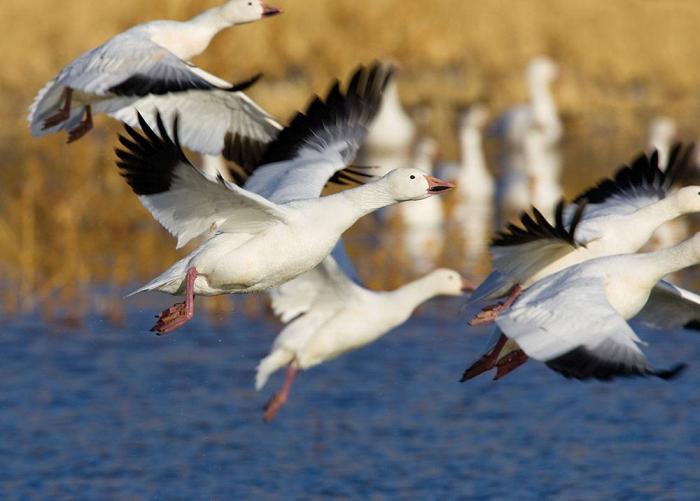
Snow geese and Canada geese may have spread the virus in North America, according to Halvorson. Both species are migratory, but they also have winter resident populations in Minnesota. Migratory individuals in this species could have picked up virus from birds on the west coast and brought it to the Midwest, where resident populations of these species became carriers. This scenario would explain the presence of the virus in Minnesota in March when the outbreak started.
Goose-avian-flu-carrier-1510introductions.jpg
Kenneth Canning/istockphoto | Snow geese are one of the species of waterfowl that could have carried the avian influenza virus from the arctic to the Midwestern U.S.
Avian influenza virus survives indefinitely at freezing temperatures. Halvorson suggested that “freeze-dried” virus in large quantities contaminating the environment is what led to the large number of introductions of the virus from wild bird populations to domestic poultry.
Avian flu virus overwhelms resources
“We failed to understand the potential scope of the outbreak,” Halvorson said. “No one planned for 40 introductions, and that left us short on people and resources. All of the planning was based on getting an introduction, then establishing a control zone and stamping it out.”
At the peak of the outbreak on April 24, 2015, Minnesota had 57 control areas 10 kilometers in diameter each. This put more than 6,000 square miles in control zones -- an area bigger than the entire state of Connecticut and just less than New Jersey. He said that, at that point, it is impossible to do everything right because there are not enough people and other resources.
“The virus was too thick and the control effort was too thin,” he said. The longer it took to depopulate a farm, then the more virus that was shed. Crews of hundreds of people used to depopulate farms had to leave the farm every day, creating the opportunity to carry virus off the farm.
“How are you going to control their contamination level?” Halvorson asked. “The answer is, you can’t.”
He called the situations where crews of inexperienced people were brought onto large farms to accomplish depopulation as quickly as possible a “catastrophe” because you had that many people coming onto and off the infected farm every day and these people had to go back home or to hotels and restaurants each evening, possibly spreading the virus. This has led to the consideration of ventilation shut down as a means of rapid depopulation.
Industry responsible for avian flu control
“When you have a disease outbreak like this, it is the industry that has allowed it to happen,” Halvorson said. “The industry is the only group that can control it. I think we all get the mistaken idea that the government is going to control the disease, that APHIS is going to come in and control the disease. No, that isn’t what they are going to do. They are going to come in and assist you with killing the flock and assist you with your cleaning and disinfection procedures, but they are not going to control the disease. They don’t have the manpower, the wherewithal, the knowledge or the skills to do that.”
Truck-wash-avian-flu-biosecurity-1510introductions.jpg
Terrence O'Keefe | A high-pressure sprayer at the entrance to this Iowa layer farm provides an example of the improvised biosecurity measures implemented as a result of the avian flu outbreak.
As the outbreak progressed, the virus became better adapted to poultry.
“At the beginning of the outbreak, you had a virus that wasn’t so good at infecting chickens, but by April, the virus was very good at infecting chickens,” Halvorson said.
Avian flu spreading from farm to farm
The 40 introductions of the avian flu virus from the wild onto poultry farms has been confirmed by molecular analysis of the virus isolates, and this analysis has also been used to show the lateral spread from these introductions. Minnesota, North and South Dakota, Wisconsin, Missouri and Arkansas had around 35 introductions from the wild, or index cases, and lateral spread to around 90 more premises. On average, each index case in these states subsequently led to around 2.5 more farms becoming infected with the virus.
In contrast, Iowa appears to have only had two introductions from wild birds, and these each resulted in about 37 other farms becoming infected with the avian flu virus. Halvorson said that one factor that likely contributed to the rapid spread of the virus from farm to farm was the fact that birds could be infected and shed virus in large quantities for five to 10 days prior to mortality increasing.
“So your daily biosecurity has to be pretty good or else you can be inadvertently spreading the virus, and we certainly did that,” he said.
Greatest threat is outside your barn door
Halvorson said biosecurity practices that had worked in the past, which were good enough for Mycoplasma gallisepticum, laryngotracheitis, and low path avian flu, were not enough to protect poultry farms from wild bird introductions of highly pathogenic avian flu. The approximately 40 introductions of avian flu from wild birds was unprecedented. He said that, in most states -- with the exception of Iowa -- biosecurity worked “pretty well” to prevent lateral spread.
The epidemiologic surveys filled out comparing farms that got avian influenza from control farms that didn’t get the disease suggests some associations between certain farm practices and increased risk of getting the disease. But, every farm is different and site-specific biosecurity plans are recommended based on that farm’s circumstances.
There is a consensus on what biosecurity programs for poultry farms need to incorporate, according to Halvorson. He said that each farm’s biosecurity plan needs for someone to be in charge, preferably a veterinarian. There needs to be training for all employees. The biosecurity plan has to incorporate the line of separation; peripheral buffer area; control movement of personnel and equipment, live birds, dead birds, manure and eggs; exclude wild birds from structures on the farm; and be reviewed with an eye toward continuous improvement.
The H5 highly pathogenic avian flu virus that has come to North America from Asia is probably here to stay for at least a few years, according to Halvorson, because the virus has persisted in Asia for 19 years. U.S. poultry producers have to assume that the virus might be just outside the barn door.

Thursday, October 15, 2015

Emergency funding granted for avian influenza research

In response to a critical need in the industry, U.S. Poultry & Egg Association (USPOULTRY) has approved $550,000 in emergency funding to support further avian influenza research and communication. These projects are to be completed on a fast track over the next several months, and address some of the most critical questions and issues that arose from the highly pathogenic avian influenza (HPAI) outbreak this past spring.
“Our industry has been greatly impacted by the avian influenza virus, and a number of critical needs have been identified for research and communication outreach. USPOULTRY is investing significant funds to help address these priority needs,” said Sherman Miller, Cal-Maine Foods, Jackson, MS, and USPOULTRY chairman.
The following avian influenza projects have been approved for funding.
  • Formaldehyde Inactivation of Avian Influenza Virus in Poultry Feed, Auburn University
  • Inactivation of Avian Influenza Virus in Poultry Litter, Southeast Poultry Research Laboratory, USDA-ARS
  • Developing a HPAI Planning Tool for Poultry Farms, University of Minnesota
  • Humane Depopulation of Poultry, Researcher to be determined
  • Onsite Holding of Sexually Immature Turkey Hens during Periods of Mandatory Disease Quarantine, Michigan State University
  • Rapid Disposal of Poultry Carcasses Following Depopulation, USPOULTRY Board Research Initiative pre-proposals are currently being sought on this research topic with pre-proposals due Nov. 6.
  • “ALL IN OR ALL GONE” - HPAI Biosecurity Outreach Program, Funding is provided to help expand the biosecurity outreach program developed by the Georgia Poultry Federation to other states.
“We will continue to focus on additional needs, addressing HPAI over the next several months, and soliciting research, communication or training projects that help prepare the industry for the presence of avian influenza,” remarked John Starkey, USPOULTRY president.

Ceva, Harrisvaccines get USDA avian flu vaccine contracts

The USDA’s Animal and Plant Health Inspection Service (APHIS) on October 13 awarded contracts to Harrisvaccines and Ceva to manufacture doses of avian influenza vaccine. This action is being taken to develop the agency’s National Veterinary Stockpile, and does not signal a decision to vaccinate for highly pathogenic avian influenza (HPAI).
While APHIS has not approved the use of vaccine to respond to HPAI, the agency is preparing to ensure that vaccine is available should the decision be made to use it during a future outbreak. Any decision to use vaccination in a future HPAI outbreak would require careful consideration of the efficacy of the vaccine, any impacts of using HPAI vaccine in the field, and the potential trade impacts.
Earlier in the year, APHIS issued a request for proposals (RFP) for vaccine manufacturers with the interest and capability to supply a variety of Eurasian (EA) H5 vaccines in sufficient numbers to establish the emergency stockpile. As part of the award, companies must:
  • Manufacture the number of vaccine doses outlined in their contract, and store those doses up to 5 years
  • Deliver the finished vaccine anywhere in the country within 10 days of a request for doses from the National Veterinary Stockpile
  • Test the vaccine regularly to ensure continued potency
  • Provide information and testing results with APHIS upon request
The HPAI vaccines covered by this award carry either conditional or full licenses from APHIS’ Center for Veterinary Biologics, and were carefully evaluated on a number of factors, including their efficacy against EA H5 viruses. 

Companies respond to earning contracts with APHIS

The Harrisvaccines product is the RNA particle vaccine, while Ceva's product is called Vectormune AI.
“The Harrisvaccines team is honored to assist the USDA in the continued fight against avian influenza,” said Dr. Hank Harris, founder and CEO of Harrisvaccines. “By stockpiling our pioneering RNA particle vaccine, the U.S. is taking an important first step in protecting our poultry and egg producers against another overwhelming loss. Harrisvaccines is proud to be a part of that effort.”
The USDA has requested that Harrisvaccines provide a total of 48 million doses, 25 million of which will be provided within 45 days, the company stated.
Ceva, in a press release, stated it had studied the evolution of the avian influenza virus and the increasing difficulty countries and regions have had in containing its spread. Ceva's avian influenza vaccines are used in other geographical areas throughout the world.
"We hope the U.S. poultry producers do not have to suffer through a avian influenza outbreak this fall or during 2016," said Dr. Kristi Moore Dorsey, Ceva vice president of research and development. "As part of the USDA vaccine stockpile, vaccine will be available for use by USDA if they decide to mandate vaccination."

APHIS continues to issue RFPs for avian flu vaccines

Although no decision has been made to use vaccine in the event of a future HPAI outbreak, APHIS will continue to issue RFPs for vaccine manufacturers on a quarterly basis through September 2016, to allow additional products to be developed and considered for the stockpile should an HPAI outbreak occur. Information about future RFPs and awards will be available on the APHIS website.